
A personal loan gives you a lump sum that you pay back in fixed installments, while a line of credit lets you borrow what you need, when you need it, up to a set limit. When you're weighing a personal loan vs. line of credit, the right choice comes down to how you'll use the money and how you want to pay it back.
Along with other personal loan alternatives, understanding how personal loans and lines of credit differ in structure, flexibility and cost can help you choose the borrowing option that best fits your plans.
Key Points
- A personal loan gives you a lump sum up front, which you repay in fixed installments over a set term.
- A line of credit lets you borrow up to a limit, pay it back and borrow again, and you only pay interest on what you use.
- Lines of credit usually have variable rates that are often lower than personal loan rates, but paying only the interest each month never clears the balance.
- A personal loan suits one large expense with a clear payoff date, while a line of credit suits costs that come up over time.
Personal Loan Vs. Line Of Credit Overview
The biggest difference is how you get the money: a personal loan pays out once, while a line of credit stays open for you to use again and again. Here's how the two compare side by side:
| Personal Loan | Line Of Credit | |
| Disbursement Method | Lump sum, paid out once | Reusable; borrow any amount up to your limit at any time |
| Secured Or Unsecured | Can be either secured or unsecured | Can be either secured or unsecured (a HELOC is secured by your home) |
| Interest Rate | Usually fixed, sometimes variable | Usually variable |
| Interest Charged On | The full loan amount | Only the money you've used |
| Loan Amount | Varies by lender and your overall financial profile | Varies by lender and your overall financial profile |
| Repayment | Fixed installment payments until the loan is paid off | A minimum payment each month, often equal to the interest; you decide how fast to pay down the balance |
| Can You Reuse It? | No, you'd need to apply for a new loan | Yes, as you pay it back |
What Is A Personal Loan?
A personal loan is money you borrow from a bank, credit union or alternative lender and pay back in regular installments. You get the full amount at once and agree to a repayment schedule before you sign.
Each payment includes both the principal amount and the interest portion. How much of your money goes toward interest depends on your interest rate and the loan term.
Personal loans are usually unsecured, which means there is no collateral backing the loan. Unsecured loans are riskier for lenders, so they usually come with higher interest rates than secured loans.
Personal Loan Features
- Fixed Loan Amount: You receive the full loan up front as a lump sum. This works well when you know exactly how much you need, like a quote for a car repair or a set of bills you want to pay off.
- Set Repayment Schedule: You agree to a term before you sign, and the loan is paid off by the end of it. Knowing your payoff date makes it easier to plan around the debt.
- Fixed Payments: You make the same payment on the same schedule, usually monthly. Because the amount doesn't change, it's simple to build into your budget.
- Fixed Or Variable Interest Rate: Many personal loans use fixed rates, but some lenders offer variable options. With a fixed rate, your payment stays the same even if rates go up.
- No Collateral Required: Personal loans are usually unsecured, meaning you don't need to pledge an asset. Some lenders let you add collateral, such as a car, which can improve your chances of approval or lower your rate.
- Used For Many Purposes: People often use them for debt consolidation, home projects, medical expenses or major purchases. Most lenders will ask what the money is for when you apply.
How Much Can You Borrow With A Personal Loan?
How much you can borrow depends on your overall financial profile, including your credit score, payment history, income and the debts you already carry. Each lender also sets its own minimum and maximum loan amounts, so it's worth comparing a few before you apply.
Borrow Up To $50,000
What Interest Rate Will You Be Charged?
Your interest rate depends on your overall financial and credit profile. In general, the lower your credit score and the higher your debt-to-income ratio, the higher your rate will be, whether you choose a personal loan or a line of credit.
Lines of credit usually have lower interest rates than personal loans and credit cards, according to the Financial Consumer Agency of Canada (FCAC). Most line of credit rates are variable, and many lenders set them at their prime rate plus a set percentage. That means your rate goes up or down when your lender's prime rate changes.
Canada's prime rate is 4.70% as of . The Bank of Canada's policy rate is 2.50% after its decision, which raised it by 0.25 percentage points.
Source: Bank of Canada. Last verified .
Since January 1, 2025, it's a crime for most lenders in Canada to charge more than 35% APR on new loans. Payday loans follow their own, separate limit.
It's best to check your credit report and score before you apply for a personal loan or line of credit. This gives you a better idea of how easy it may be to get approved and what rate you can expect.
You can check your credit score for free with Equifax or through many banks' mobile apps.
Can You Use A Personal Loan To Pay Off Your Credit Card Debt?
Yes, you can use a personal loan to pay off high-interest credit card debt. Credit card rates on unpaid balances tend to be high, so a lower-rate personal loan can cut the interest you pay.
It can also make your monthly payments easier to manage, since you trade a revolving balance for one fixed payment with a clear end date. The key is to avoid running your cards back up once they're paid off.
How Much Credit Card Debt Do Canadians Carry?
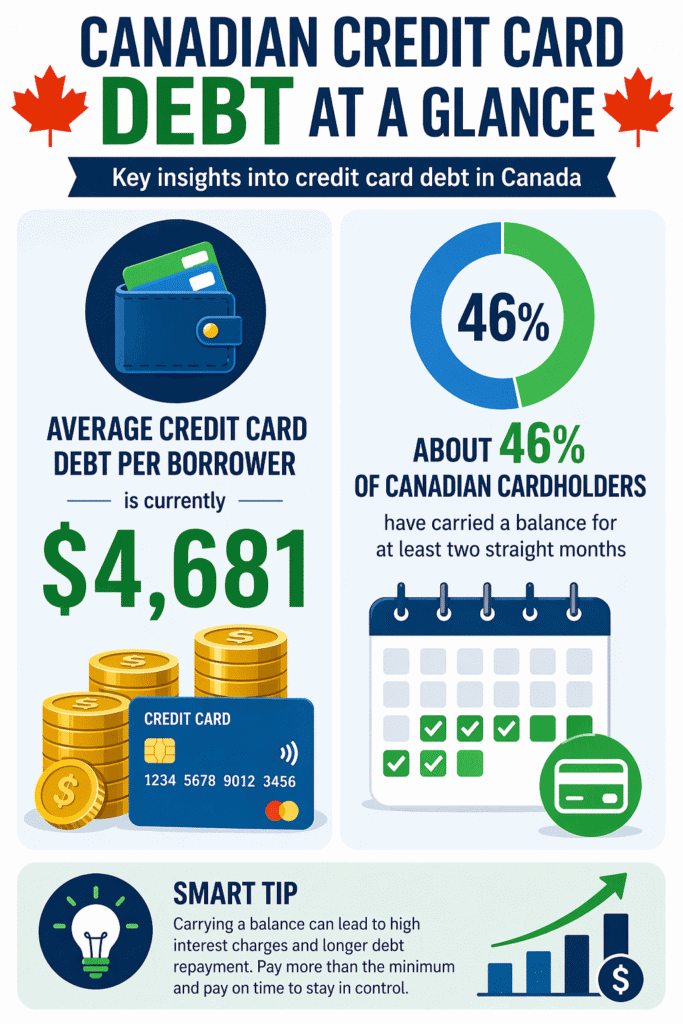
Canadians are carrying more debt than ever. In the second quarter of 2026, total consumer debt in Canada reached a record $2.64 trillion, according to TransUnion. Credit card balances grew 5.1% from a year earlier, while line of credit balances grew 7.4%1.
Can You Use A Personal Loan As A Debt Consolidation Solution?
Yes, you can consolidate your debt using the money from a personal loan.
Debt consolidation means taking out one new, larger loan to pay off several smaller debts, ideally at a lower interest rate. Instead of paying several bills at different times of the month and at different rates, you make one payment, which is much easier to manage.
It only makes sense to consolidate with a personal loan if the new rate is lower than the rates on the debts you're paying off. Compare the total cost, including any fees, before you sign.
Pros And Cons Of Personal Loans
The main advantage of a personal loan is predictability, and the main drawback is that you can't adjust it once you have the money. Here's how the two sides compare:
Pros
- Predictable payments: Fixed monthly payments make budgeting straightforward, since you know exactly what's due and when the loan ends.
- Fixed interest rates: A fixed rate protects you from rising borrowing costs, so your payment won't change if rates go up.
- Great for bigger expenses: A personal loan works well for large, one-time needs like renovations or debt consolidation.
Cons
- Limited flexibility: Once the money is paid out, you can't add to the loan. If you need more later, you'll have to apply again.
- Interest on the full amount: You pay interest on the entire loan, even if you don't end up using all the money.
- Possible prepayment fees: Some lenders charge a penalty if you pay off the loan early, so check your agreement first.
What Is A Line Of Credit?
A line of credit is a type of loan that lets you borrow money up to a pre-set limit. Unlike a personal loan, you don't take the money out in one lump sum.
You can take out as much or as little as you need, up to your credit limit. You only pay interest on the money you've withdrawn, not on the whole limit. Once you repay that money, you stop paying interest until you borrow again.
Line Of Credit Features
- Flexible Borrowing: You take out money as you need it rather than getting a lump sum. This helps when you don't know the final cost up front, like a renovation that may go over budget.
- Revolving Credit: As you pay down your balance, that amount becomes available to borrow again. You don't have to reapply each time you need money.
- Variable Interest Rates: Line of credit interest rates usually move up or down with the market. Your cost of borrowing can change even if your balance stays the same.
- Pay Interest Only On What You Use: You're charged interest only on the amount you've borrowed, not on the entire credit limit. If you don't use it, you don't pay interest.
- Useful For Ongoing Or Unpredictable Expenses: A line of credit can cover home projects, emergencies or gaps between paycheques. It's there when you need it, without a new application each time.
Secured Vs. Unsecured Lines Of Credit
A secured line of credit uses an asset as collateral, while an unsecured line of credit has nothing backing it. The most common secured type is a home equity line of credit (HELOC), where your home acts as collateral.
Because the lender takes on less risk, a secured line of credit usually comes with a lower rate. The trade-off is that you could lose the asset if you can't repay. An unsecured line of credit doesn't put your property at risk, but it usually costs more.
How Do You Repay A Personal Line Of Credit?
You repay a line of credit by making at least the minimum payment each month, and you can pay off more, or the whole balance, at any time. That's different from a personal loan, where you make set payments on set dates until the loan is paid off by its due date.
Here are the more common ways repayment works on a personal line of credit:
Draw And Repayment Periods
Some lines of credit give you a set period to withdraw money, called the "draw period." During this time, you may only have to pay the interest on what you've borrowed. If you still have a balance when the draw period ends, you move into a repayment period.
During the repayment period, you can't make more withdrawals, and you'll make monthly installments to pay off the remaining balance. The exact terms vary by lender, so read your agreement closely.
Balloon Payments
With this type of arrangement, the full balance must be repaid at the end of the draw period. Plan ahead so you have the money ready, since one large payment can be hard to cover on short notice.
Demand Line Of Credit
A less common setup is a demand line of credit. With this type, the lender has the right to ask you to repay the full balance at any time.
Warning: Interest-Only Payments Don't Shrink Your Balance
On many lines of credit, the minimum monthly payment is equal to the interest. If that's all you pay, you'll never pay off what you owe. Pay a set amount toward the balance each month so the debt actually goes down.
Pros And Cons Of A Line Of Credit
The main advantage of a line of credit is flexibility, and the main risk is that it's easy to stay in debt longer than you planned. Here's how the two sides compare:
Pros
- Flexible access: You can borrow money whenever you need it, up to your limit, without applying again.
- Interest on withdrawn funds only: You're only charged interest on the amount you actually borrow, not your full limit.
- Revolving credit: As you repay, your available credit opens up again for future use.
Cons
- Variable rates: If interest rates rise, your borrowing costs rise with them, even on money you've already borrowed.
- Flexible repayment structure: Low minimum payments can make it easy to stay in debt longer than you planned.
- Risk of overspending: Having ongoing access to money can tempt you to borrow more than you need.
What Does Each Option Cost?
What you pay depends on your interest rate and how quickly you pay down the balance. With a line of credit, paying only the minimum can cost you more over time than a personal loan, even at the same rate, because the balance never goes down. Here's an example with $5,000 borrowed at 12%:
| Option | Monthly Payment | Interest Paid Over 3 Years | Still Owed After 3 Years |
| Personal loan, fixed rate, 3-year term | $166.07 | $978.58 | $0 |
| Line of credit, paying the same amount each month (if the rate doesn't change) | $166.07 | $978.58 | $0 |
| Line of credit, paying interest only | $50.00 | $1,800.00 | $5,000.00 |
These numbers are for illustrative purposes only. Actual numbers may vary.
How Do Personal Loans And Lines Of Credit Affect Your Credit Score?
Both can help or hurt your credit score, depending mostly on whether you pay on time. Payment history is the most important part of your credit score, so making at least the minimum payment every month matters more than which product you choose.
A line of credit also affects your credit utilization, which is how much of your available credit you're using. The FCAC suggests trying to use less than 30% of your total credit limit, so a line of credit that sits close to its limit can pull your score down.
Having more than one type of credit can also help, since you may have a lower score if you only use one type of credit product. Applying for either one often means a hard credit check, which can cause a small, temporary dip in your score, so apply only when you're ready to borrow.
Key Factors Lenders Consider Before Approval
Lenders look at your overall financial profile before approving a personal loan or line of credit, not just your credit score. These are the main factors:
- Credit Score: A higher score usually gets you a better rate. It shows lenders you've handled credit well in the past.
- Income Stability: A steady income improves your chances of approval. Lenders want to see that you can keep up with payments month after month.
- Debt-to-Income Ratio: This compares your monthly debt payments to your income. A lower ratio tells lenders you have room in your budget for a new payment.
Knowing what lenders look for can help you improve your approval odds and get better terms.
Where Can You Get A Personal Loan Or A Line Of Credit?
You can get a personal loan or a line of credit from banks, credit unions and alternative online lenders. Each has different requirements, so where you apply can depend on your credit and income.
Banks
Banks often have stricter lending criteria than other lenders. You'll usually need good credit and enough income to get approved for a personal loan or line of credit at a bank.
Credit Unions
You may be able to get a lower interest rate on a line of credit or personal loan from a credit union than from a bank. You'll need to become a member before you can apply.
Alternative Online Lenders
If you don't meet a bank's or credit union's criteria, an alternative lender may be a better fit. These lenders offer personal loans and lines of credit to many types of borrowers, including people with bad credit, though you'll likely pay a higher interest rate. Here are some line of credit options you can compare:
Risk-free · No obligation Take the guesswork out of borrowing Apply once with Loans Canada and get real pre-qualified offers from Canada's trusted lenders.Lender Amount Rate Term Apply Details  Cash Money Line of Credit
Up to $10,000 34.99% 6 - 60 months APPLY NOW Show More  Nyble Line Of Credit
$30 – $250 0% Open-ended APPLY NOW Show More  Mogo Line of Credit
$100 – $5,000 34.37% Open-ended APPLY NOW Show More  LendDirect Personal Line of Credit
Up to $10,000 34.99% Open-ended APPLY NOW Show More
How To Apply For A Personal Loan Or Line Of Credit
To apply for a personal loan or line of credit, check your credit, decide what you need, compare lenders and then apply with your documents ready. Here are the steps:
Should You Use A Personal Loan Or Line Of Credit?
Choose a personal loan if you need one set amount and want a fixed payoff date, and choose a line of credit if your costs will come up over time. Both can give you the money you need, so it comes down to how you'll use it:
| When A Personal Loan Makes More Sense | When A Line Of Credit Is The Better Choice |
| You need a one-time lump sum | Your costs are spread out or unpredictable |
| You want predictable payments | You want flexibility |
| You're trying to avoid ongoing debt | You want reusable access to money |
If you're planning a single purchase at a store, you may also be weighing buy now, pay later vs. a personal loan. The same rule applies: pick the option with a total cost and payment you can manage.


Final Thoughts
A personal loan and a line of credit can both get you the money you need. A personal loan gives you structure and a clear end date, while a line of credit gives you flexibility. Pick the one that matches what you need the money for, and make a plan to pay down the balance, not just the interest.
Personal Loan Vs. Line Of Credit FAQs
Is a line of credit better than a personal loan?
Is a line of credit a loan?
How do line of credit payments work?
What happens if I don't touch my line of credit?
Which option is better for ongoing or unpredictable expenses?
Do personal loans or lines of credit have lower interest rates?
Which is easier to get, a personal loan or a line of credit?
Can I use both for debt consolidation?
Does a line of credit or personal loan affect my credit score?
Sources
- TransUnion Canada, "Canadian consumer debt reaches record $2.64 trillion as financial realities differ across households," news release, August 25, 2026.