

Employment Insurance (EI) helps many Canadians stay afloat after losing a job through no fault of their own. Even with a severance package, EI usually kicks in once that severance runs out. The problem is that EI often does not stretch far enough to cover everyday living costs, let alone a surprise expense like a car repair or a medical bill.
If money is tight while you are between jobs, you may be wondering whether a lender will approve you at all. The short answer is yes, you can get a loan while on EI. It takes a bit more effort to find the right lender, and the terms are usually not as generous as a standard loan, but it is far from impossible. EI counts as income with the right lenders, and there is a whole category of loans built for people who are temporarily out of work to draw on. Here is how it works, what you can qualify for, and the lower-cost options worth checking first.
Key Points
1. Being on EI does not automatically disqualify you. Many alternative lenders accept EI as a source of income.
2. EI is paid by direct deposit on a set schedule, and that predictability works in your favour. In a Loans Canada study, applicants with direct deposit were nearly twice as likely to be funded.
3. Loans on EI tend to come with smaller amounts and higher rates, since lenders see fixed-term benefit income as higher risk.
4. Before you borrow, check lower-cost options like a cash advance app, a credit card, or provincial assistance programs.
Can You Qualify For A Loan On EI In Canada?
Yes. You can qualify for a loan while receiving EI, though it can be harder than qualifying with a regular paycheque. Because EI is temporary and not considered traditional employment income, many banks will not count it on its own. That usually means turning to an online or bad credit lender that accepts government benefits as income and weighs other factors, like your credit score, existing debt, and any assets, more heavily.
In fact, according to the Loans Canada study, applicants whose income comes from a government benefit still get funded for a loan, though less often than those with a job4. Though, there are a few things you can do to improve your odds of being funded.
Borrow Up To $50,000
How To Improve Your Odds
The study also points to several levers you can pull, even on a fixed benefit income.
Types Of Loans You Can Get While On EI
Several loan types are open to you while on EI. They differ a lot in cost and risk, so it is worth understanding each before you apply.
Personal (Installment) Loan
An EI installment loan can be a good option as they have lower rates and longer terms, making it easier to repay. Moreover, while installment loan lenders typically have higher requirements than payday lenders, they are much more flexible than banks and other traditional financial institutions.
To qualify for an EI installment loan, you’ll need to find a lender who accepts EI as a form of income. However, these lenders will also look at your debt and usually your credit score to ensure you can manage the loan.
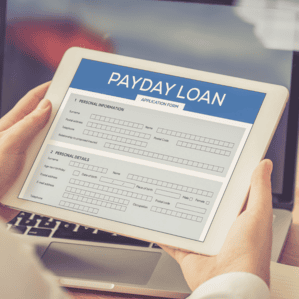
Payday Loan
An EI payday loan will allow you to access up to $1,500, depending on the lender and your finances. This type of loan is usually repaid by your next payday, up to 62 days.
To qualify for an EI payday loan, you’ll need to find a payday lender who accepts EI as a form of income. You can apply for an EI payday loan online or in-store, you simply need to be able to prove you do receive EI.
Note: Payday Loans Are A Last Resort
Payday loans are extremely expensive and can trap you in a cycle of debt if you cannot repay the full amount on time. Most provinces cap the cost at about $14 per $100 borrowed, which still works out to an annual rate in the hundreds of percent. Before you apply, check the payday loan rules in your province in our guide to payday loans and your rights, and look at the cheaper options further down this page.
Can you get a payday loan on EI with no credit check?
Often, yes. Payday lenders usually skip the credit bureau check and verify your income and bank account instead, which makes these among the easiest loans to qualify for. That is also why they will often accept other government benefits like the CCB, social assistance, or a pension the same way they accept EI, since what they care about is a steady deposit landing in your account. The trade-off is that skipping the credit check adds risk for the lender, so the rates are very high and the repayment window is short.
Personal Line Of Credit
A line of credit gives you a set limit you can draw from as needed, paying interest only on what you use. You can get one while on EI, usually through an alternative lender, though your limit may be lower and your rate higher than you would get with employment income. A few newer products offer small, low-cost credit lines and cash advances with no credit check:
- Nyble offers an interest-free credit line of up to $250 with no credit check, and it can help you build credit with on-time use.
- Bree offers interest-free cash advances of up to $750 with no credit check and no mandatory borrowing fees.
Car Title Loan
A car title loanis another type of loan you can get while on EI. Since a car title loan is secured by the car itself, lenders are more willing to lend to individuals with poor credit and non-traditional forms of income.
This ensures the lender can recoup payments even if you end up defaulting on the loan. However, it’s important to remember that car title loans come with high-interest rates and have short terms, which can make them very difficult to repay.
What Do You Need To Qualify For EI Loans?
Requirements will vary depending on the type of loan you apply for, many of which may overlap between loan types. That said, no matter what type of loan you apply for, you’ll likely need to show the lender the following:
- Proof of EI payments: Expect to show recent EI deposits, usually through bank statements or your My Service Canada Account. Many lenders want to see two to three consecutive deposits to confirm the income is steady.
- An active Canadian bank account. This is where the funds are deposited and payments are withdrawn. Many lenders verify it with bank statements or instant bank verification (IBV), a secure read-only link to your account.
- A minimum income level. Some lenders set a floor (often around $800 a month or more) to make sure you can afford the payments.
In addition to these requirements, each loan may have additional criteria to meet:
- Personal Loans & Credit Lines: If you’re applying for a secured personal loan, your lender will want to know the current value of the asset used as collateral. Depending on the lender, your credit report may also be checked. Good credit helps increase your chances of approval.
- Payday Loans: These loans are among the easiest to get, so there may be little more required other than a verification of your EI payments and a valid bank account.
- Car Title Loan: The lender will want to see proof of ownership to verify that there are no existing liens and that you own the vehicle outright. The car must also be insured, so you’ll need to show proof of insurance. Lastly, the lender may want to know the car’s current market value and may order a vehicle inspection as a result.
How To Apply For An EI Loan
To apply for an EI loan, follow these steps:
Step 1: Review Your Finances
Before applying for any loan, it’s important to understand where you stand with a lender. Lenders will look at your income, debt-to-income ratio, credit history, and other factors that affect your financial health.
By reviewing your finances prior to applying for a loan, you’ll know which lenders you’ll have a chance with. This will help you avoid applying with lenders whose basic requirements you don’t meet, which can then prevent any unnecessary credit checks, which can hurt your credit.
Step 2: Compare Lenders And Get A Loan Quote
Before choosing to work with a lender, it may be in your best interest to get a few loan quotes so that you may compare multiple offers. This can help you save hundreds of dollars in interest and fees.
If you’re unsure about how to go about doing that or simply do not have time, you can use a loan comparison platform like Loans Canada. You simply need to complete a single application to receive multiple loan offers.
Step 3: Get An EI Loan
Once you’ve reviewed your options, simply choose the lender you want to work with. You may need to send additional information to complete the application. Once you’ve been approved, the lender will send you the funds.
Benefits Of Applying For Loans On Employment Insurance Loan With An Alternative Lender
- Convenient: Alternative EI loan lenders usually offer a straightforward and entirely online application process.
- Fast Funding: Many EI loan lenders have an automated underwriting process, which results in quick approvals and fast funding. Most lenders will fund you through direct deposit or e-transfer.
- Accepts A Variety of Borrowers: Alternative lenders usually have flexible requirements that allow those with non-traditional sources of income and those with subprime credit the opportunity to get a loan.
- Free Instant Loan Quote: Many lenders also provide free instant loan quotes. You can find out how much you may qualify for based on a few questions. This usually will not hurt your credit score as there is no credit check involved.
Getting approved for a loan while on EI is possible; you just need to find the right lender who can and is willing to work with you. Do your research, and soon you should be able to find a suitable loan and lender that is right for you.
Risks Of EI Loans
An EI loan can be a lifesaver when you’re in a financial pinch but aren’t working just yet. However, there are some risks that you should be aware of before you apply:
- Additional Debt: Borrowing while on EI can lead to more debt, which can be more difficult to manage when you’re not working and rely on fixed government benefits. Plus, if you repeatedly borrow to cover ongoing expenses, you could find yourself trapped in a cycle of debt.
- High Interest: EI loans tend to come with steep interest rates, especially payday loans, making them very expensive and difficult to manage on a lower income.
- Risk Of Losing Your Collateral: If you secure the loan with a valuable asset, like your car (which is the case with a car title loan), you risk vehicle repossession if you fail to keep up with your loan payments.
Does Getting A Loan Affect Your EI?
No. A loan is borrowed money, not income, so it does not reduce or interfere with your EI benefits. What can affect your EI is earning employment income while you collect it, since you have to report earnings and your benefit may be adjusted. A loan is different and does not need to be reported as income to Service Canada.
Alternatives To EI Loans
If you’re on EI and need financial help, there are some alternatives to EI loans that may be available:
- Savings: If you have a savings account, you may consider tapping into it rather than adding more debt in the form of a loan.
- Credit Card: If you have a credit card, consider a cash advance to cover your pressing expenses. Just be aware that they come with high interest, so they’re best used if you think you can repay what you borrow very quickly, or if the rate on your cash advance is lower than the rate you can get on an EI loan.
- Government Assistance Programs: Look into municipal, provincial, and government financial assistance programs available and whether you may qualify. These can include social assistance, disability assistance, rent assistance, and senior assistance programs. One way to find these programs is to use www.211.ca, an online platform that connects Canadians with local programs they need.
- Cash Advance Services: Platforms like Bree, Nyble, and KOHO Cover offer small, interest-free cash advances to help cover expenses without the need for a credit check.
Resources To Help You Find Employment
Finding a job on your own can be challenging, but there are various resources available to help you find work:
- Canada’s Job Bank: The official job search site in Canada features job postings from various industries across the country. The resources also offer career planning tools to help you prepare for employment.
- Employment Agencies: Staffing firms are available across Canada to help local job seekers find work. They typically offer online job listings, resume assistance, and interview preparation guidance.
- Online Job Boards: Online employment marketplaces like Indeed, Monster, and Workopolis list job postings across Canada, and even allow job candidates to apply directly through the website.
- Job Training: Job training can improve your chances of finding work by providing you with in-demand skills, work experience, and connections to employers in various industries. You can get partial funding for such training if money is tight.
What Happens If I Can’t Find A Job And Run Out Of EI?
If you run out of EI and still can’t find a job, consider applying for a social assistance program in your province. These programs provide financial aid to Canadians facing financial hardship and can help cover basic costs such as food, housing, and clothing. Each province’s social assistance program comes with specific eligibility criteria based on income level and financial need. Some programs also provide employment support for those looking to find work:
| British Columbia | Income Assistance Program |
| Alberta | Social Assistance Program |
| Saskatchewan | Income Support Program |
| Manitoba | Employment and Income Assistance Program |
| Ontario | Ontario Works Program |
| Quebec | Social Assistance Program |
| New Brunswick | Income Assistance Program |
| Nova Scotia | Income Assistance Program |
| Newfoundland & Labrador | Income Support Program |
| PEI | Social Assistance Program |



Bottom Line
Being on EI is rarely where you planned to be, but it does not shut you out of borrowing. A loan is possible as long as you find a lender willing to accept benefit income, and your best results come from borrowing a modest amount, keeping your EI on direct deposit, and comparing offers before you sign. Just weigh the cost against the risk, and check the lower-cost alternatives first so a short-term fix does not become a long-term problem. And if past debt is weighing on your application, see our guide to getting a loan after a consumer proposal.
Loans On Employment Insurance FAQs
What is Employment Insurance (EI)?
Can I get a payday loan while on EI?
Can I get a loan if I’m on EI and have bad credit?
How does Employment Insurance work?
Is employment insurance considered as income by lenders?
How much money can I get through EI?
References
- Employment and Social Development Canada. (2026). EI regular benefits: How much you could receive. Government of Canada. https://www.canada.ca/en/services/benefits/ei/ei-regular-benefit/benefit-amount.html
- Employment and Social Development Canada. (2026). Employment Insurance: Maximum insurable earnings for 2026. Government of Canada. https://www.canada.ca/en/employment-social-development/programs/ei/ei-list/ei-employers/premium-reduction-program/2026-maximum-insurable-earnings.html
- Financial Consumer Agency of Canada. (2025). Payday loans. Government of Canada. https://www.canada.ca/en/financial-consumer-agency/services/loans/payday-loans.html
- Correia, P. (2026). Who really gets approved for a loan? Insights from half a million applications. Loans Canada. https://loanscanada.ca/stats/study-who-really-gets-approved-for-a-loan-insights-from-half-a-million-applications/