

Bad credit does not always mean you are bad with money. Maybe you missed a few payments after a job loss, an unexpected emergency, or an illness, and that old score still follows you around like a shadow. Traditional banks often will not look beyond the number, but you still have options.
At Loans Canada, we make it simple to apply to multiple reliable lenders with a single application. Your credit score does not need to read 800 for you to get approved, and this guide walks you through how bad credit loans work, where to get one, what they cost, and how to improve your odds.
Key Points
1. You can get a loan with bad credit from several sources, including private personal loan lenders, payday lenders, cash advance apps, vehicle title lenders, and credit builder programs.
2. A credit score between 300 and 559 is generally considered “bad,” but lenders that serve this market weigh your income, debt-to-income ratio, employment stability, and overall financial health, not just your score.
3. Bad credit loans are legal and widely available in Canada, but they usually cost more. Most are capped at the 35% APR criminal interest rate, with payday loans being a separate, higher-cost exception.
4. Across roughly 500,000 applications, applicants with low credit were still funded more than half as often as the top tier, so bad credit narrows your odds, it does not close the door4.
5. The biggest controllable factor is how your income arrives: being paid by direct deposit made applicants about 93% more likely to be funded4.
Best Bad Credit Loan Options In Canada
| Lender | Amount | Rate | Term | Apply | Details |
|---|---|---|---|---|---|
 Cash Money - Line of Credit Cash Money - Line of Credit | Up to $10,000 | 34.99% | 6 - 60 months | APPLY NOW | Show More |
 Spring Financial - Personal Loan Spring Financial - Personal Loan | $500 – $35,000 | 9.99% – 34.95% | 6 – 84 months | APPLY NOW | Show More |
 Cashco - Personal Loan - Flex Loan Cashco - Personal Loan - Flex Loan | Up to $9,000 | 35% | 6 – 60 months | APPLY NOW | Show More |
 iCash - Payday Loan iCash - Payday Loan | Up to $1,500 | $14 per $100 | Up to 62 days | APPLY NOW | Show More |
 Bree - Cash Advance Bree - Cash Advance | Up to $750 | 0% | Up to 90 days | APPLY NOW | Show More |
 Nyble - Line Of Credit Nyble - Line Of Credit | $30 – $250 | 0% | Not listed | APPLY NOW | Show More |
 easyfinancial - Personal Loan (Unsecured) easyfinancial - Personal Loan (Unsecured) | $500 – $20,000 | 29.99% – 34.95% | 9 – 84 months | APPLY NOW | Show More |
 Mogo - Line of Credit Mogo - Line of Credit | Up to $5,000 | 34.37% | Not listed | APPLY NOW | Show More |
 SkyCap Financial - Personal Loan SkyCap Financial - Personal Loan | $500 – $100,000 | 8.99% – 35% | 9 – 60 months | APPLY NOW | Show More |
 Wagepay - Payday Loan Wagepay - Payday Loan | $100 – $1500 | $8 per $100 + 24% | Up to 62 days | APPLY NOW | Show More |
 Magical Credit - Magical Installment Loans Magical Credit - Magical Installment Loans | $1,500 – $20,000 | 19.99% – 35% | 12 – 60 months | APPLY NOW | Show More |
 Money Mart - Installment Loan Money Mart - Installment Loan | $500 – $25,000 | 29.9% or 34.28% | 6 – 84 months | APPLY NOW | Show More |
 AimFinance - Personal Loan AimFinance - Personal Loan | $100 – $1,000 | 29% – 35% | 9 – 24 months | APPLY NOW | Show More |
 Green Loans - Personal Loan Green Loans - Personal Loan | Up to $1,000 | Up to 35% | Not listed | APPLY NOW | Show More |
Risk-free · No obligation
Take the guesswork out of borrowing
Apply once with Loans Canada and get real pre-qualified offers from Canada's trusted lenders.
Can You Get A Loan With Bad Credit?
Yes, you can. Having bad credit does not mean you are out of options. Many lenders specialize in working with people who have less-than-perfect credit, and they generally put more weight on your income, debt-to-income ratio, employment stability, and overall financial health than on your three-digit score. The trade-off is that most lenders who approve bad credit will charge higher rates.
And the data backs this up. Across roughly 500,000 applications submitted through Loans Canada, applicants with low credit were funded about 42% less often than the top-converting credit tier, yet that still means they were funded more than half as often as the best group4. In this part of the market, bad credit narrows your odds, it does not shut you out.
What Qualifies As Bad Credit In Canada?
As soon as you are approved for your first credit product, your lender notifies one or both of Canada’s credit reporting agencies, Equifax and TransUnion. Each bureau compiles your credit-related information into a credit report, and your payment history and debt are scored against a set of criteria to produce your credit score.
In general, Canadian credit scores fall into these bands1:
| Credit Tier | Score Range |
|---|---|
| Bad | 300 to 559 |
| Fair | 560 to 659 |
| Good | 660 to 724 |
| Very good | 725 to 759 |
| Excellent | 760 to 900 |
So if your score sits between 300 and 559, it is generally considered bad. These are the commonly used by Equifax, and the exact cutoffs can vary by bureau and scoring model, so treat them as a guide rather than a hard rule.
Types Of Loans You Can Get With Bad Credit
Whether you need to cover an unexpected expense, finance a car, or consolidate debt, there are several loan types available to borrowers with bad credit. Here is how the main options compare.
Bad Credit Personal Loans
A personal loan gives you a lump sum that you repay over a set term in installments of principal and interest. These loans are often unsecured, which means no collateral is required, and you can use them for almost anything, from home repairs to debt consolidation. A bad credit personal loan can be secured or unsecured:
- Secured personal loan requires you to put up an asset, such as a vehicle or property, as collateral. The added security improves your approval odds and usually earns you a better rate, but if you default, the lender can seize the asset to recover what you owe.
- Unsecured personal loan is a basic installment loan with no collateral. It is simpler and carries no asset risk, but it tends to come with higher rates, smaller amounts, and shorter terms, and it can be harder to qualify for with bad credit.
Keep in mind that bad credit loans already carry higher rates than standard loans. Every missed payment can trigger a penalty fee and a higher rate, and if you default for long enough, the lender can sell your debt to a collection agency, which can lead to legal action and wage garnishment if the balance is large enough.
Payday Loans
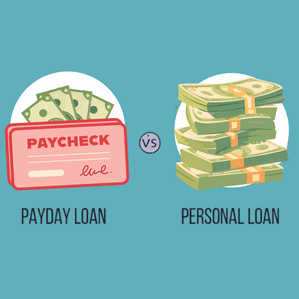
Payday loans are short-term, high-cost loans, usually $1,500 or less, that are typically due in full on your next payday. They are easy to get, often with instant approval and no credit check, which makes them appealing in an emergency. The catch is the cost. Payday loans are regulated province by province rather than under the 35% criminal interest rate cap, and lenders charge a flat fee of roughly $14 to $15 per $100 borrowed. Over a two-week term, that works out to an effective annual rate many times higher than other loan types, so a small short-term loan can become very expensive if you cannot repay it on time.
Learn more: Payday Loans
Cash Advance Services
Small cash advance apps offer quick, short-term access to money, usually up to $750, to help you cover an unexpected expense or avoid an overdraft fee. Popular options in Canada provide interest-free advances with no credit checks and fast funding:
| Lender | Product | Interest Rate | Amount | Fees | Availability | Apply |
|---|---|---|---|---|---|---|
 Bree Bree | Cash advance line of credit | 0% | Up to $750 | Optional $2.99/month membership fee |
| Apply |
 Nyble Nyble | Credit building line of credit | 0% | Up to $250 | FreeOptional $11.99/month membership fee with added perks |
| Apply |
 KOHO Cover KOHO Cover | Cash advance | 0% | Up to $500**Eligibility criteria and Terms and Conditions apply. | Starting at $2/monthCover bundle subscription; KOHO account required |
| Sign up |
Vehicle Title Loans
A vehicle title loan is a short-term loan that uses your car as collateral. These loans are fast and accessible even with bad credit, but they typically carry higher rates, and the lender holds your vehicle title during the term, which means they can repossess your car if you default.
What Do You Need To Qualify For A Loan With Bad Credit?
Requirements vary by lender and loan type, but in general a lender will assess the following:
- Income to confirm you earn enough to repay the loan. You will need to provide proof.
- Employment, usually 3 to 6 months with your current employer, to show a stable income source. Payday lenders may be more lenient and accept non-employment income such as a pension, disability, or government benefits.
- Residency in the province where the lender operates.
- Debt-to-income ratio, ideally below 32%, to show how much of your income already goes toward debt.
Those are the boxes lenders say they check. When we looked at what actually moved funding outcomes across roughly 500,000 applications, a clear ranking emerged4, and the biggest lever is one many bad-credit borrowers overlook.
Each factor is measured against its own baseline (for example, direct deposit versus no direct deposit, homeowners versus renters), so the figures show each factor’s individual effect rather than positions on one shared scale.
Learn more: Personal Loan Eligibility Requirements For Bad Credit Lenders
How To Apply For A Bad Credit Loan Online
Applying for a bad credit loan online is straightforward. Here is what to do.
Step 1. Review your finances and your credit score. Get a copy of your credit report so you know where you stand. Lenders look at your credit, income, debt level, and employment history, so checking first helps you choose a lender whose minimum requirements you actually meet.
Step 2. Compare lenders. Certain lenders will fit your situation better than others. Compare interest rates, loan amounts, fees, the total cost of the loan once repaid, and consumer reviews. A comparison platform like Loans Canada lets you fill out one application and receive multiple quotes.
Step 3. Gather your documents. Have these ready to speed things up:
- Government-issued photo ID
- 3 months of bank statements
- Proof of address
- Proof of income or employment
Step 4. Submit your application. Most bad credit lenders have an online application, so you will not need to leave home.
Step 5. Wait for approval. Many alternative lenders respond within 24 hours, others within a few days. Watch your email and phone in case the lender needs more information.
Step 6. Get funded. Once approved, you can usually expect your funds within 24 hours, sent by Interac e-Transfer or direct deposit.
Documents Required To Apply
| Document | Details |
|---|---|
| Personal information | A valid government-issued photo ID to confirm your identity. |
| Employment information | Proof of employment, such as a letter of employment or a paystub. |
| Financial details | A paystub, bank statements, or a tax return to verify your income and debt-to-income ratio. |
| Other documents | For a car loan, you may also need your driver’s license, proof of car purchase, and the title and registration papers (for a trade-in). |
How To Improve Your Chances Of Approval
The less risky you look to a lender, the better your odds, your rate, and the amount you can qualify for. Here are the moves that help most.
Switch To Direct Deposit
If you’re paid by cheque or e-transfer, consider switching it to direct deposit. According to our study of about 500,000 loan applications, borrowers whose income arrived via direct deposit had a higher likelihood of being funded than those who don’t.
+93%
Baseline = applicants paid by any non-direct-deposit method (Index 100). If you are paid by cheque or e-transfer, switching to direct deposit before you apply is one of the most powerful moves you can make.
Add Security
When you offer an asset such as a vehicle or property as collateral, the lender holds it until the loan is repaid. This added security can help you get approved with bad credit and may earn you a lower rate, but if you default on too many payments, the lender can seize and sell the asset.
Add A Co-Signer
A co-signer agrees to cover your payments if you cannot. This added security can lead to better approval odds, rates, and conditions. Just remember that if your co-signer ends up responsible for the payments and cannot afford them, they face the same penalties and credit damage you would.
Lower Your Debt-To-Income Ratio
A lower debt-to-income ratio shows lenders you can manage new debt responsibly, even without perfect credit. You can lower it by increasing your income (a side job or extra part-time work) or by paying down existing debts before you apply.
Tip: Build Your Credit First If You Can Wait
If your borrowing need is not urgent, improving your credit before you apply can raise your approval odds and lower your rate. Check your credit report for errors and correct them, pay every utility, cell phone, and internet bill on time, use a secured credit card responsibly, keep your revolving balances low, and avoid minimum or partial payments.
How Much Do Bad Credit Loans Cost?
Before you apply, think about your budget and the full cost of the loan, not just the monthly payment.
- Interest is what the lender charges to lend to you. Bad credit lenders charge higher rates because they take on more risk.
- Fees can include loan origination, document preparation, and other administrative charges, whether one-time or per payment.
- Penalties apply to every late, incomplete, or missed payment. Pay on time and you avoid them.
- Term matters too. A longer term means smaller payments but more interest overall, while a shorter term with larger payments costs less in total.
Most personal loans in Canada are capped at the 35% APR criminal interest rate, which took effect on January 1, 20252. Payday loans are the exception, since they are regulated separately by each province. Here is how the rate changes the cost of a $1,000 loan over a 1-year term.
| APR | Monthly Payment | Total Interest | Total Cost |
|---|---|---|---|
| 10% | $87.92 | $54.99 | $1,054.99 |
| 20% | $92.63 | $111.61 | $1,111.61 |
| 30% | $97.49 | $169.85 | $1,169.85 |
Soft Pulls Versus Hard Inquiries
When you shop for a bad credit loan, it helps to know the difference between a soft pull and a hard inquiry, because it can affect your already fragile score.
- Soft credit check. A soft pull happens when a lender reviews your file informally, often to pre-approve you. It is not visible to other lenders and does not affect your score. This is why it is smart to compare offers through a platform like Loans Canada, which typically uses soft inquiries.
- Hard credit check. A hard pull happens when you formally apply and the lender checks your full report to finalize a decision. It requires your consent and appears on your report. Too many hard inquiries in a short period can signal that you are desperate for credit and cause a temporary dip in your score, so only submit a formal application once you are confident a lender will offer you the best terms.
Pros And Cons Of Bad Credit Loans
Bad credit loans can help when you are in a tight spot, but they come with real drawbacks. Weigh both sides before you share any information.
Pros
- Easier approval. Many bad credit lenders have lower requirements and mainly want to see that you can repay.
- Fast and convenient. Most applications are online, short, and simple, with funds in hours or days.
- No credit check in some cases. Certain bad credit lenders do not require a credit check.
- Can build credit. If the lender reports your payments to the bureaus, on-time payments can gradually improve your score.
Cons
- Higher cost. Expect higher interest rates, fees, and penalties.
- Qualify for less. Bad credit loans tend to offer smaller amounts and more restrictive terms.
- More risk of scams. Private lenders are harder to regulate, which leaves more room for fraud and illegal rates.
Smart Alternatives To A Bad Credit Loan
Because bad credit loans often cost more, it is worth looking at less expensive options first.
- Borrow from friends or family. A written agreement with a trusted person may offer the best terms, possibly zero interest. Put the repayment schedule in writing to protect the relationship.
- Non-profit credit counselling. If your bad credit comes from overwhelming debt, a qualified credit counsellor can help with budgeting and may enroll you in a Debt Management Program. A program can show on your report at first, but it signals that you are actively addressing your debt, which is viewed positively over time.
- Government assistance programs. Look into federal or provincial programs if your difficulty is tied to a specific event like job loss or illness. These grants or subsidies are usually not loans and can help cover essentials.
- Pawn loans. If you have a valuable item, a pawn loan offers quick cash for collateral. If you do not repay, you lose the item, but your credit score is not affected. Understand the terms fully before pawning anything.
How To Avoid Bad Credit Loan Scams And Predatory Lenders
The bad credit market has some bad actors. Predatory lenders target vulnerable borrowers with inflated rates and hidden fees that trap them in a cycle of debt. Watch for these red flags.
Note: Red Flags Of A Loan Scam
Guaranteed approval. Legitimate Canadian lenders always do some due diligence, such as verifying income or residency. A promise of guaranteed approval or no refusal with no review is a major warning sign.
Upfront fees. A reputable lender may deduct legitimate fees from the loan amount, but should never ask you to pay by wire transfer, gift card, or prepaid card before funding. If a company wants an insurance fee or processing fee before you get the money, stop communicating.
Vague disclosure. The lender should clearly state the APR, including all fees, before you sign. If they are not transparent or rush you, walk away.
No licence. Always check that the lender is licensed to operate in your province. Unlicensed lenders operate outside consumer protection laws.
How To Improve Your Credit
If bad credit is holding you back, these steps can give your score a lift over time.
5 Ways To Rebuild Your Credit
Make Payments On Time
Payment history is 35% of your score, the single biggest factor. Set up automatic payments or reminders.
Use Credit Building Products
Services like KOHO and Spring Financial help you establish or rebuild credit without taking on new debt.
Use A Secured Credit Card
An upfront deposit becomes your limit. Used responsibly, payments are reported and build your score.
Report Your Rent
Rent is often your biggest monthly bill. Services like Chexy and CLC report it to help build your score.
Keep Utilization Low
Keep balances under 30% of your limit. Pay early, pay more than once a month, or raise your limit.
It also helps to know why your credit dropped in the first place. Beyond late or missed payments, common causes include uncorrected errors on your report (a wrong name or address), carrying too much revolving debt on your cards or line of credit, and applying for credit too often, since every hard inquiry lowers your score slightly.
Learn more: Credit Building Guide For Canadians

Bottom Line
Bad credit can make it harder to get approved by a bank, but it does not lock you out of borrowing. Plenty of online and alternative lenders base their decisions on your overall financial health, and the data shows that even low-credit applicants get funded regularly. Which product is right for you depends on your situation, so compare your options, watch the total cost, and lean on the levers you control, like getting paid by direct deposit and keeping your request modest. When you are ready, you can submit a single request with Loans Canada to get matched with a lender that accepts bad credit and fits your needs.
Bad Credit Loans In Canada: FAQ
Can I get a bad credit loan from a bank?
Can I get a loan with a credit score below 600?
What interest rate can I expect with bad credit?
Can I get guaranteed loan approval?
Should I get a secured or unsecured bad credit loan?
Do bad credit loans get reported to the credit bureaus?
How quickly can I get the funds after approval?
Can I get a bad credit loan without a credit check?
Can I use a bad credit loan for debt consolidation?
References
- Equifax Canada. (2026). What are the credit score ranges? https://www.consumer.equifax.ca/personal/education/credit-score/
- Financial Consumer Agency of Canada. (2025). Personal loans and the criminal rate of interest. https://www.canada.ca/en/financial-consumer-agency/services/loans/personal-loans.html
- TransUnion Canada. (2025). Understanding credit scores. https://www.transunion.ca/credit-score
- Correia, P. (2026). Study: Who Really Gets Approved For A Loan? Insights From Half A Million Applications. Loans Canada. https://loanscanada.ca/stats/study-who-really-gets-approved-for-a-loan-insights-from-half-a-million-applications/