


If you work part-time, you’ve probably wondered whether lenders will take your application seriously. It’s a common worry, but the data tells a more encouraging story than most part-time workers expect. In fact, a Loans Canada analysis of roughly 500,000 personal loan applications found that part-time workers were the only non-full-time group funded above the overall average, and part-timers paid by direct deposit actually out-performed full-time workers who weren’t.
This guide walks through what really drives approval, where part-time workers stand, and how to put your best application forward.
Key Points
1. You can qualify for a personal loan as a part-time worker. Lenders care more about steady, verifiable income than whether you work full-time.
2. How you earn, and how you’re paid, can matter as much as how much you earn. Consistent income and direct deposit both work in your favour.
3. You can often combine part-time wages with other income, like benefits, a pension, or a second job, to strengthen your application.
4. Your options range from banks and credit unions to online lenders. Bad credit can narrows your choices, but upgrading your score to fair can open more doors than you expect
Can You Get A Personal Loan As A Part-Time Worker?
Yes, you can get a personal loan as a part-time worker in Canada. Lenders aren’t really evaluating your job title, they’re evaluating how predictable you are as a borrower. Steady, verifiable income, a consistent banking history, and a manageable debt load matter far more than whether your hours are full-time or part-time. Part-time, seasonal, and multiple-job income can all count toward qualifying.
The data backs this up. When Loans Canada analyzed about 500,000 personal loan applications submitted in early 2026, part-time workers landed on the favourable side of the approval picture, something many applicants don’t realize before they apply.
Where Part-Time Workers Stand (500,000-Application Study)
Source: Loans Canada analysis of approximately 500,000 personal loan applications, early 2026
Where To Apply?
Banks tend to have the strictest lending requirements. They typically look for strong income, a good credit history, and a low debt-to-income ratio before approving a loan.
Credit unions are often more flexible than banks. They may take your overall financial relationship into account, which can work in your favour if you’re already a member.
Online and alternative lenders, which were the source of the application data used in this analysis, generally have the broadest approval criteria. They are often more willing to work with borrowers who have lower credit scores or non-traditional financial profiles, although this increased accessibility may come with higher interest rates.
Whatever the lender, compare offers on the full annual cost (APR) and fees, not just on how fast or easy the approval looks.
Best Loan Options For Part-Time Workers





Learn more: Best Personal Loan Interest Rates In Canada
Are You Considered A Part-Time Worker?
There’s no single legal definition that lenders rely on, but part-time work generally means working fewer hours than a full-time schedule, often under about 30 hours a week. What matters to a lender is less the label and more whether your income is steady and verifiable. Part-time work can include:
- A regular part-time job with set or rotating hours
- Seasonal work that runs for only part of the year
- Casual or on-call work
- Gig and freelance work, such as driving, delivery, or contract tasks
- Holding more than one part-time job at the same time
If you work part-time and pick up gig or seasonal income on top, that combined income can often be used to qualify, as long as you can document it.
Requirements: What Lenders Need To See
There’s no special “part-time loan.” You apply for the same personal loan a full-time worker would, and you generally need to meet the same core requirements:
- Be the age of majority in your province (18 or 19).
- Be a Canadian citizen or resident.
- Have steady, verifiable income. This is the big one. In the Loans Canada study, how you earned mattered more than how much: only employed applicants scored above the average for being funded (full-time about 46% more likely than the baseline, part-time about 3% more likely), while self-employed, retired, disability, and social-security income all fell below it. Simply having employment income, even part-time, puts you ahead of the average applicant.
- Have a bank account, ideally with direct deposit, so the lender can verify a consistent banking history. As mentioned, your
- Keep your debt manageable. Lenders weigh your existing debt against your income, known as your debt-to-income ratio.
- Be able to provide ID and documents, such as pay stubs, bank statements, and sometimes a tax return.
Here’s how the eight income types in the study compared with the average applicant:
| Income Type | Likelihood Of Being Funded vs. The Average Rate |
|---|---|
| Full-time employment | About 46% more likely |
| Part-time employment | About 3% more likely |
| Social security | About 33% less likely |
| Retired / disability | About 55% less likely |
| Self-employed | About 56% less likely |
| Unemployed | About 66% less likely |
Only the two employed groups scored above the average, which is the encouraging part for part-time workers: simply having a job, even part-time, puts you ahead of most applicants.
Low Income Or Weak Credit Is Not An Automatic No
The same study found that fair credit (a score of 550 to 700) converted better than good credit (over 700) by about 26%, and even low credit (under 550) was still funded at more than half the rate of the top tier.
For part-time workers specifically, approval odds dropped only gently as credit fell, much less steeply than for full-time applicants. A modest but steady part-time paycheque can present a stronger case than a larger income that’s irregular or hard to verify.
Quick Win: Get Paid By Direct Deposit
This is the single easiest change you can make before you apply. In the study, a part-time worker paid by direct deposit was more likely to be funded than a full-time worker who wasn’t paid that way. Direct deposit signals steady, predictable income, which is exactly what lenders look for. So if your pay currently comes by cheque or cash, ask your employer to switch you to direct deposit before you apply.
How To Improve Your Approval Odds According To The Data
A few steps can meaningfully improve your chances, and the data backs each one up.
5 Ways To Strengthen A Part-Time Loan Application
Set Up Direct Deposit
One of the biggest boosters in the study: about 93% more likely to be funded overall, and roughly 97% for part-timers. Switch from cheque or cash before you apply.
Right-Size Your Loan
Funding odds peaked at $5,000 to $10,000 and fell for larger amounts. Ask for what you need, not the maximum.
Document Every Income Source
Pay stubs, bank statements, or tax returns, covering your part-time wages, gig income, and any eligible benefits.
Keep Your Debt Manageable
A healthy debt-to-income ratio makes you look more predictable, which is exactly what lenders reward.
Improve Your Credit To Fair
If you have bad credit, improving it to fair (550+ – 700) can help boost your odds. Fair credit applicants got funded more often than good credit applicants.
Can You Combine Benefits And Part-Time Income?
Yes. If you receive government benefits and also work part-time, many lenders will look at your full income picture, and some will count both. Benefits that may be considered as income include the Canada Child Benefit, disability benefits, a pension, or child support, depending on the lender’s policy. Employment income tends to be viewed most favourably, so lead with your part-time wages and treat benefits as supporting income.
If your benefit is social assistance, know how working affects it before you borrow. On Ontario Works, you can earn up to $200 a month before your payment is reduced, and on ODSP up to $1,000 a month. Pairing steady benefits with part-time wages can give you the predictable, verifiable income lenders want, just make sure you can comfortably afford the loan payment on your real monthly income.
What If You’re A Gig Worker And Part-Time?
Plenty of part-time workers also drive, deliver, or freelance on the side. Lenders can usually consider this combined income, but gig earnings are variable, so documentation matters more. Keep records of your deposits, save your tax returns, and be ready to show several months of income so a lender can see a consistent average.
Because gig income is treated as self-employment, and self-employed applicants scored below the average in the study (around 56% less likely to be funded than the baseline), pairing your gig work with steady part-time wages and direct deposit strengthens your file considerably. Lead with the part-time wages, and use the gig income to round out the picture.
Types Of Loans You Can Get As A Part-Time Worker
Part-time income can support several kinds of borrowing. Roughly from lowest cost to highest:
- Personal loan. A lump sum repaid in fixed installments. This is the option the study data is based on, and it’s usually the most cost-effective if you qualify.
- Personal line of credit. A revolving limit you draw from as needed, paying interest only on what you use. Useful for ongoing or uncertain costs.
- Secured loan. Backed by an asset such as a vehicle or savings, which can improve both your odds and your rate when income is variable.
- Credit-builder loan. Designed to build your credit rather than hand you cash up front, useful if your score is the main obstacle.
- Cash advance apps. Apps that advance a small portion of your expected pay. Convenient for small, short-term gaps, but watch the fees and optional “tips,” which can add up to a high effective cost.
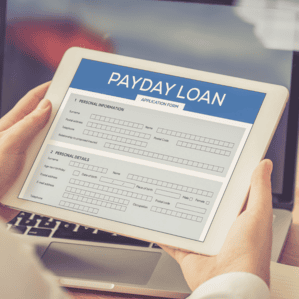
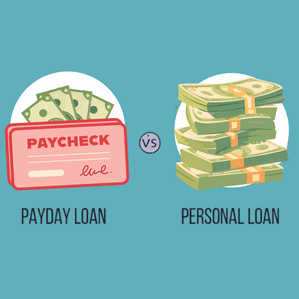
- Payday loans. Available with almost any income, but extremely expensive (often equal to several hundred percent APR) and easy to get trapped in. Treat these as a last resort, after the options above.
How To Apply: Step By Step
- Check your credit so you know where you stand before you apply.
- Add up your income, including part-time wages, gig income, and any eligible benefits.
- Set up direct deposit if you don’t already have it, since it’s one of the strongest signals in your favour.
- Gather your documents: ID, pay stubs, bank statements, and a tax return if you have one.
- Compare lenders on APR and fees, not just approval speed. Pre-qualifying where it’s offered lets you check your rate without a hard credit check.
- Apply for a right-sized amount and have your documents ready to upload so the lender can verify your income quickly.
Learn more: How To Apply For A Loan
Tips For Managing A Personal Loan On A Part-Time Income
Because part-time income can fluctuate, build your loan around your realistic monthly budget rather than your best months. Choose a term with payments you can comfortably manage, set up automatic payments so you never miss one, keep a small buffer for slower periods, and avoid borrowing more than you truly need. On-time payments also build your credit over the life of the loan.
Watch Out For Predatory Lenders
Lower-income and part-time borrowers are sometimes targeted by predatory lenders. Be wary of “guaranteed approval,” pressure to borrow more than you need, hidden fees, or any lender that demands an upfront fee before funding your loan. A legitimate lender discloses the full cost clearly, is licensed in your province, and lets you compare terms before you commit.



Bottom Line
Part-time status isn’t the obstacle many people fear, unpredictability is. The data is clear: employment income gives you a step up, getting paid by direct deposit can make you a stronger candidate than a full-time worker who isn’t, and even less-than-perfect credit leaves the door open. Figure out what counts as your income (wages plus gig work plus eligible benefits), set up direct deposit, document everything, keep your debt and credit healthy, and right-size your loan. Done that way, your part-time income can absolutely support a personal loan.
Personal Loans For Part-Time Workers FAQs
Yes. Part-time workers were the only non-full-time income group in the Loans Canada study to score above the average for being funded. Employment income, even part-time, works in your favour.
A lot. Direct deposit made applicants about 93% more likely to be funded overall and lifted part-time workers’ odds by roughly 97%, enough that a part-timer paid by direct deposit out-performed a full-time worker who wasn’t.
Often, yes. Many lenders will consider combined income from multiple jobs, as well as gig or seasonal work. Be ready to document it.
Often, yes. Fair credit actually converts best, and even low credit was still funded at more than half the rate of the top tier. Bad credit narrows your odds rather than closing the door, and for part-time workers, the drop-off across credit tiers was relatively gentle.
Yes. A co-signer with stronger credit or steadier income can improve both your approval odds and your interest rate.
It depends on your income and existing debt. Right-sizing your request helps, funding odds in the study peaked in the $5,000 to $10,000 range and fell for larger loans.
References
- Loans Canada. (2026). Who Really Gets Approved For A Loan? An analysis of approximately 500,000 personal loan applications submitted in early 2026. https://loanscanada.ca/stats/study-who-really-gets-approved-for-a-loan-insights-from-half-a-million-applications/