


Every day, Canadians all across the country deal with financial emergencies: their cars break down, they have to take expensive last-minute trips to deal with family crises, and they lose their jobs. All of these debts and expenses can be financially straining, leading to the need for immediate cash.
That’s when a payday loan may seem like an extremely convenient way to borrow a small amount of money as quickly as possible. But before you apply, it’s worth understanding exactly how payday loans work, what they really cost in 2026, and the lower-cost options you may have.
Key Points
1. A payday loan is a small, short-term loan (usually $100–$1,500) that’s due in full on your next payday — typically within 62 days.
2. Most provinces cap the cost at $14 per $100 borrowed, which works out to roughly 365% APR on a two-week loan.
3. Payday loans are exempt from Canada’s 35% criminal interest rate, so it’s provincial rules — not the federal rate cap — that protect you.
4. Because the full balance is due on payday, payday loans can pull you into a cycle of debt that’s hard to escape.
5. A small installment or personal loan is almost always cheaper, and unlike a payday loan, it can help you build credit.
What Is A Payday Loan?
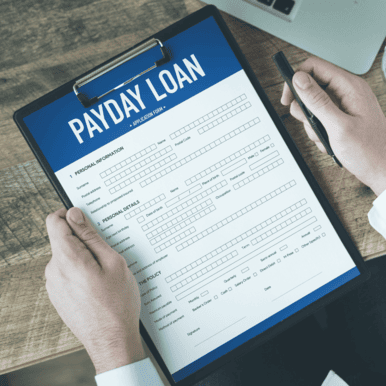
A payday loan is a small, high-cost, short-term loan in Canada. Depending on the lender you borrow from, you’ll be able to borrow as little as $100 to as high as $1,500. Like its name “payday”, repayment is due on your next payday, which is typically between 14 and 62 days after you receive the loan.
Moreover, payday loans are very easy to qualify for — you simply need a stable source of income and an active bank account. No credit checks are required, making them ideal for those with poor credit. However, while convenient, they have extremely high interest rates and fees, making them a very costly option. Generally, you should only rely on a payday loan as a last resort.
Where Can You Get A Payday Loan In Canada?






If you’d rather apply from home, compare your options for online payday loans in Canada, or see the full range of payday loan apps and lenders available across the country.
How Much Do Payday Loans Cost?
Payday loans are notorious for their high interest rates and exorbitant fees. Under Canada’s federal Criminal Interest Rate Regulations, payday lenders in provinces with an approved payday loan framework can charge a maximum of $14 per $100 borrowed1. Quebec is the major exception: it effectively bans conventional payday lending by capping the annual interest rate at 35%, which makes the storefront payday model unworkable there.
That $14 fee sounds small, but because the loan only lasts about two weeks, the annualized cost is enormous: a $14-per-$100 fee on a 14-day loan works out to roughly 365% APR1. For comparison, most credit cards charge around 20% per year. So borrowing $500 for two weeks would cost you about $70 in fees — and if you can’t repay on time, those fees stack up fast.
Because the exact maximum cost varies by province — and changes over time — it’s worth checking the current, province-by-province breakdown of what payday loans really cost before you borrow.
Payday Loan Calculator
Payday Loan Cost Calculator
See what a payday loan really costs before you borrow.
$14 per $100 is the maximum cost in every province and territory except Quebec and the Northwest Territories, where different rules apply.
Estimates only. Actual costs may vary.
What Is The Payday Loan Cycle?
The payday loan cycle is one of the worst financial situations to be in. You’re pulled into the cycle when you can’t afford to pay back your first payday loan. This happens because payday loans need to be paid back by your next paycheque.
Let’s say you take out a $500 payday loan today because you have no money and only get paid next Friday. But on the following Friday, the payday loan company takes back their $500 plus interest — and now you have no money again, and you still need to pay rent and buy groceries. This is where the cycle starts, because now you need to take out another payday loan to cover those costs.
It’s a common trap, not a rare one. Research from the Financial Consumer Agency of Canada has found that most payday loan borrowers take out more than one loan, with many using them to cover recurring, necessary expenses rather than one-time emergencies2. If you’re already caught in it, look into debt relief for payday loans rather than borrowing again — and understand how some payday lenders profit from financial hardship.
Can You Get A Payday Loan With Bad Credit?
Most payday loan companies do not run a credit check when they review a loan application. This means that having bad credit won’t affect your chances of being approved for a payday loan in most cases. With a payday loan, you are limited in how much you can borrow, however. Most payday lenders will offer you approximately $100 to $1,500, depending on the requirements you must meet. In many cases, you’ll have the money in your hand within an hour if you qualify.
If bad credit is the only thing standing between you and cheaper financing, it’s worth seeing whether you qualify for a bad credit loan first — these cost far less than a payday loan while still working with low scores.
Do Payday Loans Affect Your Credit Score?
Most payday lenders don’t report your loan to the credit bureaus when you borrow or when you repay on time, so a payday loan generally won’t help you build credit — even if you handle it perfectly. The risk runs in one direction: if you default and the debt is sent to a collection agency, that collection can be reported and can seriously damage your score for years.
In other words, a payday loan offers little upside for your credit and meaningful downside. Here’s a closer look at whether payday loans affect your credit.
Pros And Cons Of Payday Loans In Canada
Like any other credit product, there are both positives and negatives to payday loans. Depending on your financial situation and need, a payday loan can be a good or bad option.
Payday Loan Pros
- Online payday loans – There are hundreds, if not thousands, of online payday lenders in Canada. You can apply and get funded without having to step outside your home. Similarly, if you prefer applying in person, you can find many local payday lenders near you.
- e-Transfer payday loans – Many payday lenders will fund you via Interac e-Transfer for extra-fast funding.
- Weekend payday loans – Many payday lenders operate on weekends. If you need cash on a Saturday or Sunday, it’s possible through various payday lenders.
- No credit checks – One of the main appeals of payday loans is that they have no credit checks. Many payday lenders accept Canadians who have bad credit or have previously gone through a bankruptcy or consumer proposal.
- Cooling-off period – In Canada, numerous laws and regulations protect consumers from predatory lending practices. Generally, you’ll have 1–2 days to cancel the payday loan without penalty if you decide against using it.
Payday Loan Cons
- Payday loan cycle – One of the dangers of payday loans is the payday loan cycle. Many Canadians get trapped because they’re unable to repay their first loan.
- High cost – As mentioned, payday loans have extremely high interest rates and fees. These costs can quickly add up, making them unaffordable.
- Predatory lenders – The payday lending industry is littered with predatory lenders and scammers who prey on borrowers with limited resources and options.
What Are Your Rights As A Payday Loan Borrower?
There are many payday loan laws and regulations in place to protect you from unethical lending practices. Because payday lending is regulated mainly at the provincial level, your exact protections depend on where you live — but almost every province gives you a similar core set of rights:
- Cooling-off period – A law that lets you change your mind about using a payday loan, without any penalty, usually within 1–2 business days.
- Loan rollovers – Extending or renewing a payday loan, or rolling one loan into another, is not allowed in most provinces.
- NSF fee – If you’re unable to pay your loan, there’s usually a fee of around $20 added to your balance.
- Licensing – Payday lenders must hold a valid provincial licence. Borrowing from an unlicensed lender leaves you with far fewer protections.
One point that surprises many borrowers: payday loans are exempt from Canada’s criminal interest rate. As of January 1, 2025, the federal criminal rate of interest was lowered to 35% APR1, but payday loans were specifically carved out — so that ceiling doesn’t apply to them, and the provincial rules above are what actually protect you.
Note: Know The Rules In Your Province
Note: Know The Rules In Your Province
Payday loans are extremely expensive and can lead to a cycle of debt if you’re unable to repay the full amount borrowed. Cooling-off periods, rollover rules, and penalty limits all vary by province, so check your full rights as a payday loan borrower before you sign.
What Factors Should You Consider Before Applying For A Payday Loan?
Before you decide to apply for a payday loan, it’s important to consider the following six factors. They’ll help you determine whether a payday loan is the right option for you.
6 Things To Weigh Before Taking A Payday Loan
Your Current Financial Situation
Are you already struggling to make ends meet or juggling debt? A payday loan usually increases financial hardship rather than solving it.
Available Alternatives
Could you borrow from a friend or family member, or apply for a more affordable installment loan instead?
The Repayment Term
Payday loans are due on your next paycheque. Will you actually have the money to repay the loan plus interest in two weeks?
Amount Borrowed
Is the amount enough to truly help — or will it just add to your debt and make necessary expenses harder to cover?
Interest Rate
Ask about the APR, not just the two-week fee that lenders advertise. Payday loan APRs are often 365% or more.
Penalties & Fees
What are the extra fees? Are there excessive or even illegal administrative charges? How badly are you penalized for a late payment?
When Is A Payday Loan A Good Option?
While our number one recommendation is for you to avoid payday loans if possible, we understand there are certain situations where taking one on is the only option.
- Emergency situations – When you need money as soon as possible, a payday loan could be the best choice simply because of its quick approval times.
- You know you can pay it off – If you can guarantee you’ll repay the loan by your next paycheque, using a payday loan to cover an important expense can be a reasonable choice.
- You have no alternatives – If you’ve exhausted all other options and can’t get a loan due to bad credit or negative remarks like a previous bankruptcy or debt settlement, a payday loan can be a fallback.
Alternatives To Payday Loans
If you’ve been thinking about taking out a payday loan — or if you ever need quick access to money in the future — please consider any of the following options first:
- A small installment loan
- A line of credit
- Tapping into your home equity
- Borrowing from a friend or family member
For a side-by-side look at lower-cost choices, see the full list of alternatives to payday loans.
Should You Get A Payday Loan Or A Personal Loan?
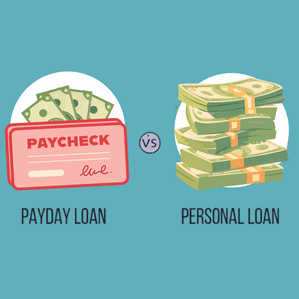
The idea of a payday loan can be very appealing, especially if your current financial situation isn’t great. But what payday loan providers don’t advertise is that once you take out one loan, you can be sucked into a cycle that will completely ruin your finances. Small personal loans, on the other hand, are just as simple and quick as payday loans but come with significantly fewer problems.
Interest rates on small personal loans are significantly lower than those of a payday loan. Personal loans also come with installment payment plans, so you can pay off the loan with small, affordable payments over an extended period — unlike payday loans, where the full balance is due in one payment. Generally, an installment loan is the better choice: instead of being bogged down by one huge payment, you get a longer payment period and smaller payments.
| Feature | Payday Loan | Personal / Installment Loan |
|---|---|---|
| Typical amount | $100 – $1,500 | $500 – $50,000 |
| Cost | ~$14 per $100 (≈ 365% APR) | ~9% – 35% APR |
| Repayment | Full lump sum on next payday | Fixed monthly installments |
| Term | Up to 62 days | 3 – 60 months |
| Credit check | Usually none | Soft or hard check |
| Builds credit? | Rarely | Yes, if payments are reported |
| Best for | True one-time emergencies | Planned borrowing and cheaper financing |

Bottom Line
Payday loans are fast and easy to qualify for, but that convenience comes at one of the highest costs in Canadian lending — roughly 365% APR — and the lump-sum repayment structure can keep you borrowing. Provincial rules give you real protections, so it pays to know your rights before you sign. And in most cases, a lower-cost option exists. If you’re already struggling with payday loan debt, don’t reach for another loan — explore the broader loan options available in Canada, or look into debt relief options that can actually break the cycle.
Payday Loan FAQs
Why are payday loans so expensive?
What do I need to get approved for a payday loan?
What happens if I can’t pay back a payday loan?
Are payday loans bad?
How do I apply for a payday loan?
References
- Government of Canada. (2024). Criminal Interest Rate Regulations (SOR/2024-114). Canada Gazette, Part II. https://gazette.gc.ca/rp-pr/p2/2024/2024-06-19/html/sor-dors114-eng.html
- Financial Consumer Agency of Canada. (2022). Payday loans: Market trends. Government of Canada. https://www.canada.ca/en/financial-consumer-agency/programs/research/payday-loans-market-trends.html