
Running a retail business in Canada can be both profitable and challenging. Whether you’re operating a cozy florist shop, a bustling thrift store, a boutique pet store, or a regulated cannabis or vape shop, one thing is for sure: retail businesses need reliable financing to start, grow, and stay competitive.
This guide breaks down the best small business loan options for Canadian retail businesses, how they work, and how to qualify.
Key Points
- Retail businesses often require substantial upfront capital for inventory, equipment, and leasing.
- Both banks and private lenders offer financing, including options for startups and borrowers with bad credit.
- Government programs can help new retail owners access affordable funding.
- Alternative financing options such as lines of credit, inventory financing, and merchant cash advances are also available to support ongoing operations.
- Retail franchises can also be financed with small business loans.
How To Get A Small Business Loan To Start My Retail Business
Entrepreneurs looking to start their own retail store can access a small business loan from banks, credit unions, and private lenders. However, depending on their finances and business plan, the amount they can qualify for can vary widely, ranging from as little as $10,000 to 1 million or more.
Small business loans are great options for covering major upfront expenses involved in launching a new store, including:
- Securing a storefront or commercial lease
- Purchasing initial inventory
- Buying equipment (POS systems, shelving, refrigeration, etc.)
- Marketing and branding
- Hiring staff
- Working capital for the first few months
Where Retail Startups Can Get Small Business Loans
Retail entrepreneurs can access financing from the following sources:
Banks – Banks are best for established businesses or startups with strong financial backing. These financial institutions offer the lowest interest rates on startup business loans but have stricter requirements. They typically require the following:
Private Lenders – Private lenders offer faster loan approvals and fewer documentation requirements, making them ideal for new retail owners who need capital quickly or have less-than-perfect credit.



Learn more: Best Small Business Loans In Canada
Can You Use A Small Business Loan To Buy A Retail Franchise?
Yes, many lenders allow you to use a small business loan to purchase a retail franchise. It can help cover the following expenses:
- Franchise fees
- Initial inventory
- Equipment and signage
- Marketing and grand‑opening expenses
Types Of Retail Franchises You Could Buy
The following table outlines a few types of retail franchises available for purchases, and examples within each industry:
| Retail Category | Retail Store | Franchising Info |
| Grocery Stores | No Frills | – Minimum personal investment of $50,000 required1 – Applicants should have 3–5 years of leadership experience in retail and/or grocery operations |
| Discount Stores | Dollarama | – Franchise fee around $20,0002 – 4% royalties – Relatively low startup costs |
| Furniture Stores | The Brick | – Offers strong national brand recognition and steady customer traffic3 – Franchisees receive full support with site selection, store setup, inventory planning, & ongoing operations |
| Coffee Shops | Tim Hortons | – Minimum $100K liquid assets & $500K net worth required4 – Experience running a business or managing employees |
| Electronics | Mobile Klinik | – Authorized distributor for TELUS and Koodo5 – Franchisees can benefit from a consistent supply of high-quality, professionally refurbished smartphones |
| Clothing Stores | Plato’s Closet | – Focuses on resale clothing, specifically to the teen demographic6 – Over 500 store locations throughout Canada & the US |
| Specialty Stores | Pet Value | – Offers strong support & supply chain7 – Opportunities available in most provinces |
Government Programs To Help Start Your Retail Business
Canada offers several programs to support new and growing retail businesses.
Canada Small Business Financing Program (CSBFP)
The CSBFP helps small businesses access loans by having the federal government share the risk with participating lenders, making banks more willing to approve financing. Businesses can use the funds to purchase equipment, make leasehold improvements, or acquire real estate needed for expansion.
This program is best for newer or smaller companies that may not qualify for traditional lending on their own.
Black Opportunity Fund (BOF) – Black Entrepreneur Program
The BOF provides financial support, mentorship, and business training specifically designed to help black entrepreneurs grow and scale their businesses. It focuses on addressing systemic barriers by improving access to capital and professional networks.
Through partnerships with financial institutions and community organizations, the program helps black‑owned businesses strengthen long‑term sustainability.
Women Entrepreneurship Strategy (WES)
The WES initiative offers funding, mentorship, and business development resources to support women‑owned businesses across Canada. It aims to increase women’s participation in entrepreneurship by improving access to capital and growth opportunities.
Retail business owners can benefit from customized programs that help them grow, expand, and compete more effectively.
Provincial Programs
Government programs may also be available at a provincial level. Here are a couple of examples:
| If you live in QC | Evol offers financing for startups8: – Conventional loans available – Loan amounts range from $20,000 to $100,000 – Minimum investment of 5% of the project value required – Maximum amortization period of 8 years |
| If you live in ON | Futurpreneur offers young Canadian business owners the following9: – Up to $75,000 in funding – Mentorship and practical resources also available to help new entrepreneurs launch and grow their ventures |
How To Qualify For A Business Loan In Canada
Lenders typically evaluate both your personal and business financials. Here’s what they look for:
- Time in Business: Established businesses (1–2 years+) have an easier time qualifying.
- Annual Revenue: Lenders may request business financial statements, bank statements, and tax returns.
- Personal and Business Credit Score: Higher credit scores improve approval odds and reduce interest rates.
- Cash Flow: Lenders review your cash‑flow statement to ensure you can repay the loan.
- Collateral (for secured loans): Retail businesses may use valuable assets to back the loan, such as inventory, equipment, and personal assets.
| What If You’re Starting A New Retail Business From Scratch? Startups with no business history may need the following: – A strong business plan – Good personal credit – A personal guarantee – Proof of industry experience or business acumen |
Can I Get a Business Loan Without a Credit Check?
Yes, some private lenders may offer small business loans without a credit check, but this comes with limitations, such as the following:
- Loan amounts are smaller
- Interest rates are higher
- Terms are shorter
If your business has poor credit or seasonal cash flow fluctuations, you could consider invoice factoring, where repayments are tied to your credit card or sales volume, making them more flexible.
How Much Will A Business Loan Cost You?
The cost of a business loan depends on several factors, including:
- Interest rate
- Loans amount
- Loan term
Here’s an example of how much you can expect to pay on a term loan if you get a $100,000 business loan at a 7% interest rate (with two different loan terms).
| Loan Amount | $100,000 | $100,000 |
| Loan Term | 7 years | 4 years |
| Interest Rate | 7% | 7% |
| Monthly Payment | $1,509.27 | $2,394.62 |
| Total Interest | $26,778.51 | $14,941.97 |
| Total Paid | $126,778.51 | $114,941.97 |
As you can see, a shorter loan term might mean higher monthly payments, but you’ll spend considerably less overall compared to the longer term.
Alternative Business Financing Options You Can Use To Grow Your Retail Business
Retail businesses often need flexible financing to manage inventory, cash flow, and seasonal fluctuations. Here are the best alternatives.
Business Line Of Credit
A business line of credit is a revolving form of credit that you can draw from as needed. Like a personal line of credit, it offers flexible withdrawals and repayment. However, it generally has higher limits than a personal line of credit. Similarly, you only pay interest on the amount you actually use.
Inventory Financing
Inventory financing is a loan secured by your retail inventory, and while it can work like a term loan with fixed payments over a set period, it’s usually more flexible. Lenders advance a percentage of your inventory’s value, and repayment can be structured either as fixed installments or tied to sales, making it easier to manage cash flow.
Learn more: Inventory Financing
Merchant Cash Advance (MCA)
A merchant cash advance provides a lump sum of cash upfront, which is repaid as a percentage of your daily credit and debit card sales. Repayments fluctuate with your revenue, making it easier to manage cash flow when sales are inconsistent. MCAs are a practical option for retail stores that process a lot of card transactions and need quick access to funds to cover gaps caused by slow periods or delayed customer payments.
| Loan Type | How It Helps Retail Businesses |
| Business Line Of Credit | – Covers seasonal inventory purchases – Bridges cash‑flow gaps – Handles emergency expenses |
| Inventory Financing | Allows you to borrow against the value of your merchandise. |
| Merchant Cash Advance (MCA) | – Ideal for businesses with high card‑transaction volume – Useful when revenue fluctuates – Helps cover cash‑flow gaps when customers delay payments |
What Type Of Retail Stores Can I Open In Canada?
Canada’s retail sector is diverse. Here are some popular options:
- Florists: Florists face seasonal peaks (Valentine’s Day, Mother’s Day, weddings).
- Antique Shops: Antique stores often rely on unique, high‑value inventory.
- Thrift Stores: Thrift stores typically operate on donated or low‑cost inventory.
- Pet Stores: Pet stores carry a wide range of products and may offer services like grooming or training.
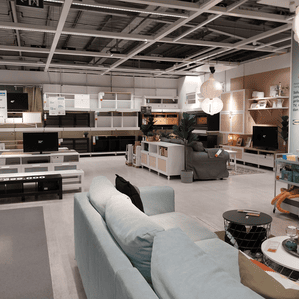
- Furniture Stores: Furniture retailers require significant capital due to High‑value inventory.
- Cannabis & Vape Shops: These regulated industries face higher startup costs due to Licensing fees and high Compliance requirements.
Business Financing For Any Industry
Own a business in another industry? Click here
Things To Consider When Opening A Retail Store
Before opening a retail store in Canada and applying for financing, consider these important factors that will directly impact your business:
Tax Registration (GST/HST)
If your business earns more than $30,000 per year, you must register for GST/HST (federal/provincial sales tax). This applies to all retail businesses.
Learn more: How to Apply For a GST Number?
Zoning Rules
Every municipality uses zoning bylaws to control where businesses can operate. Retail stores are generally allowed in commercial zones, but rules vary.
| Example: If you want to open a Regulated Retail store, like a cannabis or vape shop, you’ll face stricter zoning rules, such as: – Minimum distance from schools, daycares, and youth facilities – Restrictions on signage – Limits on how many stores can operate in a given area – Only allowed in specific commercial zones Each province sets its own rules, and municipalities add additional layers. |
Hidden Start-Up Retail Store Costs
Opening a retail store involves more than rent and inventory. There are many other costs that can add up quickly.
- POS systems, cash registers, and security systems
- Insurance (liability, stock, fire, theft)
- Staff training, uniforms, and certifications
- Utilities, cleaning, and ongoing compliance fees
Cash Flow Gaps
Retail stores often face seasonal or cyclical drops in sales, depending on the type of business. To manage these periods, you can use:
- Invoice Factoring – Get cash upfront based on your outstanding invoices. This helps cover payroll, rent, or inventory when clients haven’t paid yet.
- Business Lines of Credit – Flexible funds you can draw on as needed, perfect for covering unexpected expenses or bridging slow months.


Final Thoughts
Retail businesses in Canada typically require substantial upfront funding, whether you’re starting a new business, expanding one already in operation, or buying a franchise or existing business. The good news is that there are many financing options available. With the right loan, retail owners can stabilize cash flow, invest in growth, and build a thriving business in a competitive market.
FAQs
What types of business loans are available for retail businesses in Canada?
Can startup retail businesses qualify for financing?
What can I use a retail business loan for?
Do lenders finance regulated retail businesses like cannabis or vape shops?
Can I get a business loan for a retail business with bad credit?
References:
1Loblaw Companies Limited. No Frills Franchise Owner. Loblaw.ca
2Dollar Store. Join Our Franchise. DollarStore.ca
3The Brick. The Brick Franchise. TheBrick.com
4Tim Hortons. Franchising at Tim Hortons Canada. TimHortons.ca
5Mobile Klinik. Franchise Opportunities With Mobile Klinik. MobileKlinik.ca
6Plato’s Closet. Own A Plato’s Closet. PlatosCloset.com
7Pet Valu. Love Lives Here and so could your franchise opportunity. PetValu.ca
8Evol. startup project (commercialization stage). Evol.ca
9Futurpreneur. Up to $75,000 for your startup. Futurpreneur.ca