
Personal loans can help you cover unexpected expenses, consolidate debt, finance home improvements, or pay for other major purchases. While banks and credit unions are common sources of financing, they’re not the only option available.
Direct private lenders offer the same options with a more flexible approval process. Instead of focusing primarily on your credit score, many private personal loan lenders consider factors such as your income, employment, and overall ability to repay the loan, making personal loans more accessible to a wider range of borrowers.
Key Points
1. Private personal loan lenders offer fast and flexible loans to borrowers with all types of financial backgrounds, including those with bad credit.
2. Approval is based more on income, employment stability, debt-to-income ratio, and collateral rather than credit score.
3. Interest rates and fees are higher with private lenders than with traditional banks.
Who Are Direct Private Lenders In Canada?
These private lenders can be individuals, companies, or groups of investors who lend their capital to others, with no middlemen involved. Unlike banks, private lenders are not subject to the same level of regulation and can set their own approval criteria, loan terms, and interest rates.
This flexibility allows private lenders to work with borrowers from a wide range of financial backgrounds, including those with bad credit. That said, this added flexibility often comes with higher interest rates compared to traditional lenders.
Learn more: A Guide To Private Loans In Canada
Best Direct Private Lenders For Personal Loans In Canada 2026
Most personal loans from private lenders are found online. From application to funding, you can get a personal loan online from most private lenders.
Filters


- Amount
- Up to $35,000
- Rate
- 9.99% – 34.95%
- Term
- 6 – 84 Months



- Amount
- Up to $50,000†
- Rate
- 19.99% – 34.99%*
- Term
- 6 – 120 months


- Amount
- Up to $10,000
- Rate
- Up to 34.99%
- Term
- Up to 60 months


Requirements For A Personal Loan With A Direct Private Lender
Compared to traditional banks, direct private lenders often have a simpler application process. Many use instant bank verification (IBV) to confirm your information electronically, reducing the amount of paperwork required. However, you may still need to meet certain eligibility requirements and provide supporting documents, such as:
What You May Need
- Proof of age. You will need to be the age of majority in your province to get a loan.
- Proof of address. Lenders require that borrowers be residents of Canada, which you can prove with a lease or utility bill.
- Proof of employment and income. The lender will want to verify that you are working and that your income will adequately cover the loan payments. They may use IBV or ask for pay stubs and bank statements.
- Existing debt information. Lenders may also assess your debt-to-income ratio to see if you can afford the loan after your monthly debts.
- Employment stability. Direct private lenders usually want you to be employed for at least 3 months to ensure the stability of your job.
- Collateral, if applicable. If you have collateral to offer, it can help you qualify for the loan. If you default, the lender has a valuable asset they can recover and sell to offset potential losses.
Are You Paid Via Direct Deposit?
According to a Loans Canada study, having your income deposited via direct deposit can increase your odds of being approved for funding. In fact, it showed that applicants paid via direct deposit were more likely to be funded than those paid any other way.
Can You Get A Personal Loan With A Direct Private Lender If You Have Bad Credit?
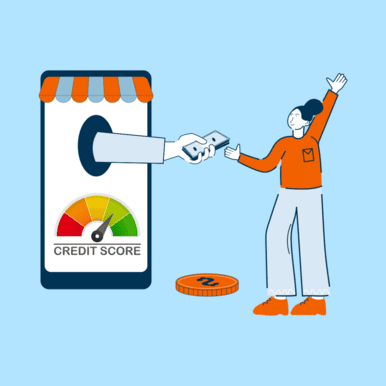
Yes, it is possible to get a personal loan from a direct private lender even if you have bad credit. Unlike traditional banks, many private lenders look beyond your credit score and focus more on your current financial situation and ability to repay the loan.
In fact, the study by Loans Canada showed that there are certain things you can do to improve your odds of being funded for a loan.
How To Improve Your Odds Of Getting A Personal Loan According To The Study
Each factor is measured against its own baseline (for example, direct deposit vs. no direct deposit; homeowners vs. renters), so the figures show each factor’s individual effect rather than positions on one shared scale.
How To Get A Personal Loan With A Private Lender
Getting a personal loan from a direct private lender is often faster and more flexible than borrowing from a traditional bank, especially if you have bad credit or non-traditional income. To get a personal loan from a private lender, follow these steps:
Learn more: How To Apply For A Personal Loan In Canada
Pros And Cons Of Direct Private Lenders For Personal Loans In Canada
Pros
- Any credit is accepted. You may not need a good credit score to qualify, unlike with traditional lenders. Private lenders typically accept borrowers with a wide range of credit scores, including those with bad credit.
- Fast funding time. Private lenders often use automated underwriting to expedite approval and funding. Some lenders will provide the loan within a day after you submit the application.
- All online. The entire process can usually be completed online, from application to funding.
- Flexible terms. Whether you are looking for a short-term or a long-term loan, you can find terms between 3 months and 5 years with most private lenders.
Cons
- Interest rates can be high. Interest rates tend to be higher than traditional loans, making these loans more expensive. However, by law, no lender can charge you an APR over 35%.
- Fees. When working with direct private lenders, there are certain fees to watch for, including administrative and loan origination fees.
Cost Of Personal Loans From Private Lenders
Private lenders generally charge higher fees and interest rates than traditional lenders. However, by law, they cannot charge you an APR exceeding 35%.
Here is how much a $5,000 private loan would cost you at 15% and 25% APR.
| Lower Rate | Higher Rate | |
|---|---|---|
| Loan amount | $5,000 | $5,000 |
| Interest rate | 15% | 25% |
| Loan term | 12 months | 12 months |
| Monthly payment | $451.29 | $475.22 |
| Total paid | $5,415.50 | $5,702.65 |
| Total interest paid | $415.50 | $702.65 |
Note: This is for illustrative purposes only. Numbers are calculated using an online loan calculator.
Best Time To Consider A Private Personal Loan
A private personal loan can be a good option if:
- You have been denied by your bank because of bad credit, high debt, or limited income, whether it is because you are a single parent or have limited resources.
- You need funds quickly, such as for moving expenses, car repairs, emergency travel, or medical bills.
- You are self-employed or work contract jobs, and your income does not meet traditional bank criteria.
Are Direct Private Lenders Safe?
Yes, many direct private lenders in Canada are trustworthy and offer a secure borrowing experience. For people who need more flexible options or do not meet traditional bank requirements, a reputable private lender can be a reasonable alternative.
How To Choose A Reputable Direct Private Lender In Canada
Before committing to a loan with a private lender, it is still a good idea to verify that the lender is credible. Reliable private lenders are:
- Upfront about their fees and conditions
- Make communication easy
- Follow all applicable Canadian regulations
Bottom line: A trustworthy lender will be transparent, explain your options clearly, and provide a clear breakdown of costs. If anything seems unclear or rushed, that may be a warning sign.
What Is The Difference Between A Private Lender And A Bank?
Banks are large, regulated institutions that offer some of the lowest rates available, but they hold you to strict credit and income standards. Private lenders use their own money and set their own rules, so they can approve borrowers a bank would turn down, usually at a higher cost. In short, a bank is cheaper if you qualify, while a private lender is easier to qualify for. The trade-offs are the opposite of what you get when you get a loan from a bank, which rewards strong credit with lower rates.
What Is The Difference Between A Private Lender And A Credit Union?
Credit unions are member-owned and often more flexible than banks, with competitive rates and a community focus. Even so, they check your credit and usually want you to become a member first. Private lenders skip the membership step and are more lenient on credit, but they charge more for that flexibility. If a cooperative option appeals to you, it is worth understanding how to get a loan from a credit union before you decide.
What Is The Difference Between A Private Lender And A Loan Broker?
A private lender actually funds your loan. A loan broker does not lend money at all. Instead, they match you with lenders from their network and may charge a fee for the service. A broker can save you time shopping around, while going straight to a private lender cuts out the middleman. The distinction matters, because a personal loan broker is paid to connect you with lenders, not to fund the loan itself.
Other Financing Options Available From Direct Private Lenders
Besides personal loans, other financing options may be available from direct private lenders in Canada:
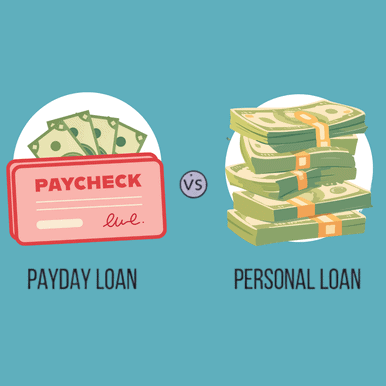
- Payday loans. Small, short-term loans that are typically due on your next payday. They are quick to get but the most expensive way to borrow.
- Lines of credit and cash advances. Revolving credit you can draw from as you need it, paying interest only on the amount you actually use.
- Cash advance apps. Apps like KOHO Cover and Bree offer small, low-cost advances against your next paycheque, usually with lighter verification than a full loan.
- Mortgages. Private lenders frequently offer mortgages for borrowers who may not qualify with banks. These work the same way as bank-issued mortgages, with the property securing the loan. Funds are issued as a lump sum, then repaid through installments that include both principal and interest.
Final Thoughts
Private lenders offer borrowers an alternative path to obtaining a personal loan, especially for borrowers with bad credit. While banks and credit unions are an option, private lenders may provide those with subpar credit a better chance of loan approval. Be sure to work with the right lender who can provide you with the loan you need without putting you in a position where you are unable to make good on your loan payments.
FAQs On Working With Direct Private Lenders
Yes, you can get approved for a personal loan even if your credit score is lower than it could be. Bad credit lenders provide loans to borrowers with credit scores that are too low to get approved through conventional channels. Rather than placing more focus on your credit score, these lenders place more emphasis on your latest financial activity, your income and job, and your assets and debts.
Private lenders may charge a late fee, increase the interest rate on the loan, or repossess the collateral used to secure the loan. You will want to read the fine print in the contract you sign to identify what the consequences may be if you miss your loan payments.
Funding can be much faster than banks, often with instant pre-approval and funding within minutes after final approval.
Payday loans and bad credit loans from private lenders are among the easiest to get approved for, because they require limited documentation and focus on your income rather than your credit score. Just keep in mind they are also among the most expensive.
Private and alternative lenders are usually the easiest to get a loan from. They set their own approval criteria and look at your overall financial situation, so they can approve borrowers who do not meet the strict standards of a bank or credit union.
Private lenders are individuals, companies, or groups of investors who lend out their own capital rather than money from depositors. Because they are not subject to the same regulation as banks, they can set their own rates, terms, and approval requirements.
If you have been turned down elsewhere, private and bad credit lenders are your most likely options. You can also improve your odds with a secured loan backed by collateral, or by adding a co-signer with stronger credit.
®Fairstone Financial Inc. is a wholly owned subsidiary of Fairstone Bank of Canada.
*Interest rates are subject to change. Actual Annual Percentage Rate (APR) varies based on the province of residence and individual factors like credit details and loan amount. The interest rate on an unsecured personal loan is 31.99% in BC.
†On approved credit. Terms and conditions apply. Interest rates vary by province/territory and from customer to customer based on factors like credit score and borrowing history. See Fairstone’s website for details.
Fairstone Financial Inc. holds high-cost credit licenses in AB, MB (License #85047, expiring 20-02-2026) and QC; it has applied for a high-cost credit grantor license in NL. For license information by province, visit Fairstone.ca/HCCG
In Ontario, Fairstone Financial Inc. is licensed as mortgage brokerage 10821.
In Nova Scotia, Fairstone Financial Inc. is licensed as mortgage lender #2021-3000028.