


Are you getting fed up of renting? What if you rented but simultaneously paid toward owning your home? That’s the concept behind a rent-to-own home plan — sometimes called a lease-to-own. With high rents and a tight housing market, rent-to-own is more appealing than ever for Canadians who want the equity-building of ownership without needing to qualify for a mortgage today. It’s particularly useful if you’re paying down debt, recovering from a consumer proposal or bankruptcy, or otherwise unable to qualify for a traditional or bad credit mortgage yet.
This guide explains what a rent-to-own home actually is, how the agreement works, and what to know before you decide if it’s right for you.
Key Points
1. A rent-to-own home is a property you rent under a contract that also gives you the right (or in some cases, the obligation) to buy it at a future date — usually 1 to 5 years out.
2. There are two contract types: option-to-purchase (you have the right but no obligation to buy) and lease-purchase (you’re obligated to buy at the end of the term).
3. You’ll typically pay an upfront option consideration of 2–5% of the purchase price, plus a higher-than-market monthly rent where a portion is set aside as a down payment credit.
4. You still need to qualify for a mortgage when the lease ends — rent-to-own buys you time to build credit and savings, but it doesn’t replace mortgage approval.
How Do Rent-To-Own Home Programs Work?
Rent-to-own homes show up across Canada, but they’re most common in provinces where housing prices are highest — particularly British Columbia, Alberta, and Ontario. One of the main reasons rent-to-own programs are so appealing is that they’re presented as a more accessible option for buyers who either don’t qualify for a traditional mortgage or don’t have enough savings for a reasonable down payment.
Essentially, a homeowner, investor, or rent-to-own company will rent out a home that’s already in their name, similar to how a landlord would with an apartment. You then rent the home, making regular monthly payments — but unlike a standard lease, your contract also includes a path to eventually buy the property.
Each rent-to-own home comes with a contract you must adhere to if you want to remain living there. Strictly speaking, there are two types of contracts: option-to-purchase and lease-purchase.
If you choose option-to-purchase, you sign an agreement that gives you the option, but not the obligation, to buy the house when your rental term is over. If you choose lease-purchase, you’ve agreed to buy the house at the end of the term — and you can face penalties if you don’t follow through.
For the full program breakdown including provider options and alternatives, see our guide on rent-to-own homes in Canada.
Caution: Always Read The Contract
If you’re considering a rent-to-own home, read your contract carefully and seek professional advice if you have any concerns. A contract is worth spending time and money on to make sure you’re protected from surprises later. You need to understand the terms and any penalties associated with breaking the agreement.
The Option Consideration
With most rent-to-own agreements, you’ll be required to pay what’s known as an “option consideration” or “option money” upfront. This is a non-refundable (but often negotiable) deposit, usually amounting to about 2% to 5% of the home’s final asking price.
The option consideration is a separate contract that gives you the right, but not the obligation, to buy the house at the end of the rental period. Depending on the terms of the agreement, the full sum or part of the option money may go toward your eventual down payment on the home — but every contract is different, so confirm exactly how your deposit is treated before signing.
The Rent
After the agreement is confirmed, you’ll make regular payments, usually monthly, over several years (1 to 5 years is most common). The payments are divided into two parts: a larger portion (typically about 75%) covers the rental fee, and a smaller portion (typically about 25%) is set aside for your future down payment.
Once the lease is over, if you still wish to (or are obligated to) buy the house, you’ll need to qualify for a regular mortgage to cover the remaining purchase price. Ideally, by that point you’ll have built up enough of a down payment and raised your credit score enough to be approved.
If your agreement is an option-to-purchase and you decide not to buy — whether you don’t like the house, the neighbourhood, or your circumstances have changed — you can walk away from the deal, but you’ll forfeit your option deposit and any rent credits.
The Final Asking Price
The terms of the contract will dictate what you ultimately pay for the home if and when you decide to buy it. Under some contracts, the final asking price is agreed upon and locked in before you move in. Under others, the asking price is only determined at the end of the leasing term and is based on the home’s appraised market value at that time.
Most buyers prefer to have the asking price locked in because the real estate market is always fluctuating — but a locked-in price can also work against you if home values fall during your term.
A Basic Rent-To-Own Example
For the sake of example, let’s say you’ve signed a 3-year rent-to-own agreement. You pay $1,000 in rent per month, with an additional $500 per month going toward your down payment. Here’s how the math works:
| Component | Amount |
|---|---|
| Home purchase price (locked in) | $350,000 |
| Upfront option deposit (2.5% of purchase price) | $8,750 |
| Remaining at the end of the rental term | $341,250 |
| Monthly rent | $1,000 |
| Monthly portion toward the down payment | $500 |
| Down payment built over 3 years ($500 × 36 months) | $18,000 |
| Remaining mortgage after 3 years | $323,150 |
So by the end of your 3-year rental contract, you’d have invested $18,000 toward the down payment on the home. The catch: you’ve also paid $36,000 in rent over those 3 years, and none of that money goes toward the purchase. In total, you’ve put $62,750 into the home, but only $26,750 ($8,750 deposit + $18,000 in rent credits) actually counts toward the final asking price.
Is A Rent-To-Own Home Right For You?
Rent-to-own arrangements come with real upsides — a path to ownership when traditional mortgages aren’t available, the chance to test out a home before committing, forced down payment savings, and an opportunity to build credit. They also come with real risks, including losing your deposit if you can’t qualify for a mortgage at the end of the term, paying more than the home is worth, and being responsible for maintenance.
For a full breakdown of the pros and cons, a decision framework, and a comparison to alternatives like the FHSA and down payment assistance programs, see our full guide on rent-to-own homes in Canada.

Bottom Line
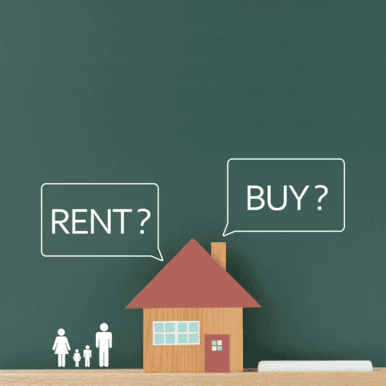
A rent-to-own home gives you a structured 1-to-5-year path to ownership while you rent — you pay an upfront option deposit, a higher-than-market rent (with part of each payment set aside for your down payment), and have the option (or obligation) to buy at the end of the term. It’s a useful tool if your credit needs work or you don’t have a down payment yet, but it’s not a substitute for being able to qualify for a mortgage when the lease ends. Always have a real estate lawyer review the contract before you sign — the cost is small compared to the risk.
Rent-To-Own Home FAQ
References
- Canada Mortgage and Housing Corporation. (2025). Rental Market Survey. https://www.cmhc-schl.gc.ca/professionals/housing-markets-data-and-research/housing-data/data-tables/rental-market