
In the not-so-distant past, getting a loan meant visiting your local bank, meeting with a loan officer, and handing over stacks of paperwork to verify your income. Today, the rise of online banking and tools like Instant Bank Verification (IBV) has transformed that experience, making it possible to apply for everything from everyday financing to personal emergency loans entirely from home.
But while digital applications offer unmatched convenience, it’s still worth asking whether there are situations where applying in person has an advantage.
Key Points:
- Online loan applications offer faster approval, greater convenience, and easier comparison of multiple lenders.
- In-person applications provide personalized guidance and may help borrowers with complex financial situations qualify.
- Online lenders tend to have more flexible approval criteria but may charge higher interest rates, while in-person lenders often offer lower rates with stricter requirements.
- The best option depends on your priorities—choose online for speed and accessibility, or in person for support and potentially better loan terms.
Is It Better To Apply Online Or In Person For A Loan?
In a nutshell, the answer is, “it depends”. Of course, online applications offer a degree of speed and convenience that in-person applications simply cannot match.
However, in-person applications will provide a level of customer support that you won’t get with any online bank or loan application. For some people, that human element can be worth waiting around for.
Applying In Person For A Loan
Depending on the lender and type of loan, you might have the option of applying in person, online, or both. While many borrowers today turn to the best online loans for speed and convenience, applying in person still offers the benefit of personalized assistance and face-to-face interaction, which can be particularly helpful for first-time borrowers or those with unique circumstances or questions.
The downside is that in-person applications will almost always require more time and effort compared to the streamlined experience of applying online.
Pros Of Applying In Person For A Loan
- Better Customer Service: Loan officers can offer personalized assistance and address your questions and issues directly, which can be hard to find with online applications.
- Guidance: Borrowers can get help with application details as they fill out the application.
- Stronger Relationships: In-person applications can help establish rapport with lenders, which might be beneficial in future.
Cons Of Applying In Person For A Loan
- Time-Consuming: Applying in person usually requires waiting in line or scheduling an appointment, plus there may be a limited number of hours during which a loan officer is available on any given day.
- Harder To Compare Offers: While most online lenders allow you to prequalify and easily compare offers, that’s not often possible with an in-person application, which makes comparing loan offers more of a challenge.
- Slower Process: Loan approval and funding generally will take longer compared to online applications.
- Documentation: You’ll likely need to provide physical copies of all of your required documents, adding an extra step to the process for you.
Applying For A Loan Online
Most lenders today, particularly private and online-only lenders, offer customers a streamlined and often very fast application process. These are designed to be quick and easy, which makes this method a good option for those short on time.
That said, traditional financial institutions like big banks and credit unions may still require in-person visits for certain loan types, such as mortgages, RRSP loans, or auto loans, where more detailed documentation or face-to-face discussions are necessary.
Pros Of Applying For A Loan Online
- Easy Digital Process: For basic personal loans, applications can take less than 5 minutes to complete with certain online lenders. Moreover, some may not even require any documents except for a personal ID due to instant bank verification (IBV).
- Fast Approval & Funding: Many online lenders have a partially automated underwriting system. As such, they can often approve and disburse funds within 24 to 48 hours. Many also offer funding via e-transfer, which can deliver funds within 30 minutes after approval.
- Availability Anytime: With in-person applications, you generally have to wait and schedule an appointment to apply for a loan. Instead of waiting, you can apply and get approved anytime, including the weekends depending on the lender.
Cons Of Applying For A Loan Online
- Higher Risk Of Scams: The online lending space is crowded, and not all lenders are legitimate. Fake websites, hidden fees, and predatory interest rates can be harder to spot when everything happens digitally.
- Privacy & Data‑Security Concerns: Online applications require you to upload sensitive information, like ID, income documents, banking details. Even reputable lenders can experience data breaches. If you’re not careful about the site you’re using, your personal information could be exposed.
- Less Personalized Guidance: Online forms can feel rigid. If your financial situation is unique, you might not get the nuanced advice a human loan officer would offer. Automated systems may reject you for reasons a person could have worked around.
What Types Of Loans Can You Apply For Online?
Many loan types are available online today, including the following:
| Personal Loans | You can apply for personal loans online, which are typically unsecured and can be used for many purposes, including, emergency expenses, home improvements, or debt consolidation. |
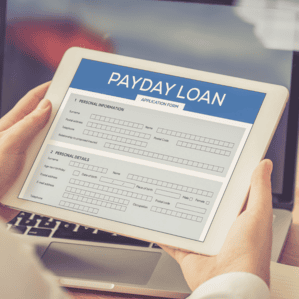
| Payday Loans | A payday loan is a small, short‑term loan that typically must be repaid by your next paycheque and often comes with very high fees or interest charges. You can get a payday loan online by filling out a short application on a lender’s website and submitting basic personal and income information for quick approval. |
| Auto Loans | Many lenders allow you to apply for auto loans online, giving you the option to finance a new or used vehicle or even refinance an existing car loan through a digital application process. |
| Mortgage Loans | It’s possible to begin applications for mortgages, mortgage refinancing, home equity loans, and HELOCs online, although some parts of the process may still require in‑person verification or documentation. |
| Student Loans | Private student loans and student loan refinancing options are available online through banks, credit unions, and fintech lenders that offer fully digital application systems. |
| Business Loans | Small business owners can apply online for various types of business financing, including term loans, lines of credit, invoice financing, and merchant cash advances. |
| Buy Now, Pay Later (BNPL) | Buy Now, Pay Later services function as short‑term installment loans that you can apply for instantly at checkout when shopping online or in certain stores. |
Cost & Approval Differences: Online Vs. In-Person Loans
When deciding whether to apply online or in person, it’s important to look beyond convenience and consider how each option affects your loan cost and approval chances.
Online Loans: Online lenders often use automated underwriting systems and have lower overhead costs, which allows them to process applications quickly and offer more flexible approval criteria. This can make them a strong option for borrowers with lower credit scores or non-traditional income.
However, that flexibility can come at a cost, as interest rates with online lenders are sometimes higher than those offered by traditional financial institutions.
In-Person Loans: In contrast, banks and credit unions that handle in-person applications typically have stricter lending requirements. While this can make approval more challenging, qualified borrowers are often rewarded with lower interest rates and more favourable loan terms.
The trade-off is a longer approval process and less flexibility for borrowers who fall outside standard lending guidelines.
| Ultimately, online loans tend to prioritize speed and accessibility, while in-person loans focus more on cost efficiency and structured approval criteria. |
How Do Lenders Evaluate Online Vs. In-Person Applications?
The way your loan application is assessed can differ depending on whether you apply online or in person.
Online Lenders
Online lenders typically rely on automated underwriting systems that analyze your financial data, including credit score, income, banking activity, and debt levels.
Tools like instant bank verification allow lenders to quickly assess your financial health and make near-instant decisions. While efficient, this process can be less flexible if your application falls outside standard criteria.
In-Person
In-person applications, on the other hand, are more likely to involve manual review by a loan officer. This allows for a more personalized evaluation, where additional context—such as employment stability, future income potential, or unique financial circumstances—can be taken into account.
In some cases, this human element can help borrowers qualify when an automated system might have declined them.
| Rise Of Instant Bank Verification Instant Bank Verification (IBV) is a digital process that allows lenders to securely access and verify an applicant’s banking information immediately. Instead of submitting physical documents like bank statements or proof of income, as a typical loan application would require, applicants can simply provide their banking login credentials through a secure portal that is hosted through third-party companies such as Plaid or Flinks, and skip those steps of documentation and verification. This enables lenders to instantly access your bank statement temporarily, which they can use to assess your financial details such as account balances, reliability of income, and identity. As a result, IBV technology is increasingly being used by private lenders in particular, and significantly speeding up their loan approval process. Plus, because it removes the need for documentation, IBV also reduces the risk of errors as well as enhancing overall convenience for borrowers |
How Can You Get An Online Loan With Manageable Monthly Payments?
To secure an online loan with monthly payments you can comfortably afford, start by deciding how much you need to borrow and comparing that amount to your income and existing financial obligations. This helps you understand how the loan will fit into your budget and gives you a clearer picture of what you can realistically repay.
How To Understand Your Loan Affordability
A key part of determining affordability is calculating your debt‑to‑income (DTI) ratio, which is the percentage you get when you divide your total monthly debt payments by your gross monthly income. Lenders rely heavily on this number to gauge how responsibly you manage debt, and it’s a useful tool for evaluating whether a new online loan would come with affordable monthly payments.
Most lenders prefer a DTI in the range of 30% to 40%, as this suggests you have a healthy balance between your income and your financial commitments.
Additional Factors That Influence Loan Affordability
When assessing whether you can handle a new loan, it’s also important to think about your employment stability, how you would manage payments if you lost your job, and whether you have savings to cover emergencies. You should also consider your bank balances, your essential monthly expenses, and your overall budget to ensure the loan won’t put unnecessary strain on your finances.
Should You Apply Online Or In-Person For A Loan?
If you’re still on the fence about whether you should apply in-person or online, here are some reasons you should apply online vs in-person:
Apply Online If:
- You Want To Get An Estimate Or Pre-Approval: Most online lenders will give you the chance to prequalify without affecting your credit score. Most pre-approved offers will allow you to see exactly what rates and terms are available to you, making it easier to compare options.
- You’re Looking For A Lender With Fewer Requirements: Most non-traditional lenders who cater to borrowers with poor credit or lower incomes typically operate online. As such, if you’re looking for more accessible loan options, online lenders will be the best route.
- You Prefer Speed And Convenience: If you’re in urgent need of a fast, short-term loan, applying online with a lender who offers same-day approvals will be your best choice.
Apply In-Person If:
- You Have A Strong Relationship With The Lender: If you’ve got a well-established relationship with your bank, applying in-person for a loan might get you better access to potential discounts and deals compared to an online application.
- You’re Not Tech-Savvy: If navigating digital platforms and websites feels uncomfortable or overwhelming, an in-person application can provide a more familiar, guided experience.
- You Prefer Direct Customer Service: Face-to-face interaction allows you to ask detailed questions, clarify doubts, and receive personalized guidance throughout the loan application process.



Bottom Line
Whether you apply for a loan in person or online really comes down to your personal banking preferences. For most of us, it’s going to be a choice between the benefit of face-to-face customer service, versus the convenience and speed of online applications and funding.
That said, if you’ve got a strong relationship with your bank then showing up at your local branch and asking about rates, terms and discounts could well be worth your time. And if not, there are plenty of great deals to benefit from with the many online lenders across Canada today.